




How much does liquor liability insurance cost?
Liquor liability insurance is an affordable policy for most small businesses, at just $41 per month. Explore your options and save with TechInsurance’s free quotes.
What do small businesses pay for liquor liability insurance?
On average, liquor liability insurance costs $41 per month. Most businesses pay between $150 and over $4,000 per year, depending on their unique business risks.
Our figures are sourced from the median cost of policies purchased by TechInsurance customers from leading business insurance companies. The median provides a better estimate of what your business is likely to pay because it excludes outlier high and low premiums.
Common liquor liability premiums for TechInsurance customers
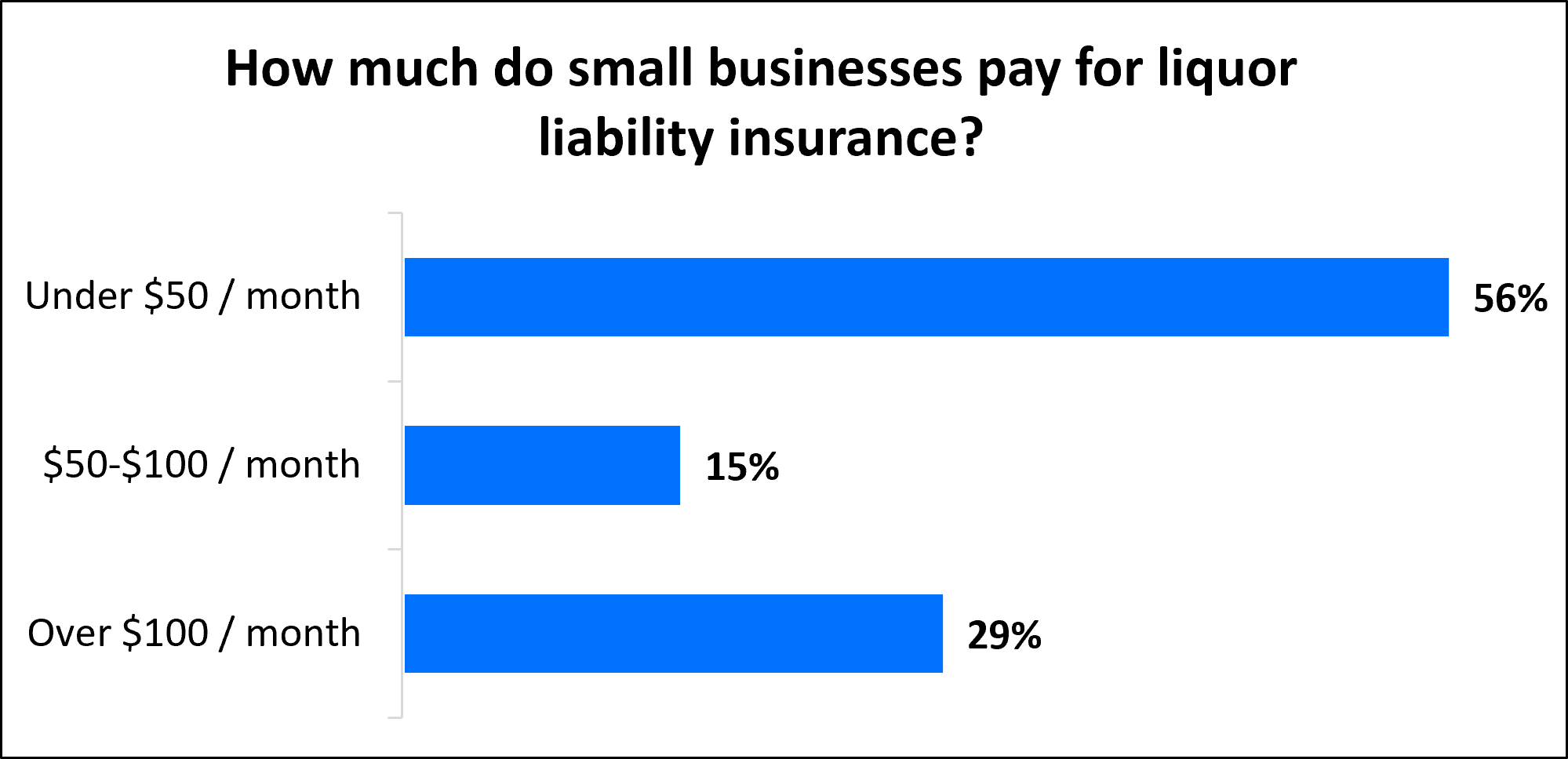
TechInsurance's customers pay an average of $41 monthly for liquor liability coverage. 56% pay less than $50 per month, and 15% pay between $50 and $100.
Insurance costs for small businesses vary based on their risks and the coverage they select.

Key factors that affect liquor liability insurance costs
Your insurance provider will look at the following factors when calculating your liquor liability insurance costs:
Policy limits
The amount you pay for liquor liability insurance depends on your coverage limits. Higher limits are more expensive, but they offer more coverage.
The average liquor liability policy purchased by TechInsurance customers includes $1 million in per-occurrence coverage and $2 million in aggregate coverage.
Liquor liability insurance covers legal fees, settlements, and medical bills up to the policy limits if alcohol is sold to an intoxicated individual who then harms another patron physically or damages their property. It's also known as dram shop insurance.
Any small business that sells or serves alcohol is usually required to have this coverage in order to obtain a liquor license. This includes restaurants, liquor stores, taverns, fast food restaurants, grocery stores, and convenience stores.
Get general liability coverage for complete protection
For full protection and complete peace of mind, you should also get general liability insurance. A general liability insurance policy protects your business from common third-party risks, such as customer bodily injury and property damage that frequently occur in retail businesses and food and beverage companies.
It often includes host liquor liability coverage, which helps cover legal expenses and medical costs if an intoxicated individual at a business-hosted special event causes third-party bodily injuries or property damage.
Liquor liability insurance can be added as an endorsement to your general liability policy, or can be purchased as a standalone policy.
Deductible
The deductible you select will affect the cost of your liquor liability insurance policy. The higher your deductible, the lower your premium.
Choosing a higher deductible is an easy way to save on your premium, but make sure it's one you can still afford. If you can’t pay your deductible, you won't be able to collect on an alcohol-related claim.
Liquor sales
The percentage of your alcohol sales directly impacts your liquor liability insurance costs. Small businesses with a higher percentage of alcohol sales typically have higher premiums.
For this reason, bars and nightclubs should expect to pay more for their liquor liability coverage than restaurants, pharmacies, convenience stores, or other businesses that also sell food.
Larger liquor sales events, including fundraisers, weddings, or festivals, may require special event insurance. This coverage is ideal for vendors and other professionals who don't need insurance all the time. This can provide short-duration coverage and can potentially help save money.
Industry risks
The industry you work in and the type of business you run impact your premiums.
For example, because of their higher risk of alcohol-related incidents, banquet halls, food trucks, and mobile bartending businesses generally pay more for liquor liability insurance than restaurants and pizzerias.
Businesses that serve more alcohol face an increased risk of issues related to intoxicated patrons, which can lead to bodily injuries, property damage, or lawsuits and legal defense costs.
Mobile bartenders that are hired to work at weddings, private parties, and festivals face additional risk because they have less control over the environment. This means they have to rely on venue staff or hosts for security and crowd management, which increases the likelihood of liquor liability claims.
Additional factors, including longer operating hours, security presence, and the frequency of alcohol consumption, can also impact costs.
Key professions that need liquor liability coverage







Location
Specific state laws dictate the amount of liquor liability insurance a business needs to carry if alcohol consumption is permitted on the premises during its hours of operation.
Requirements around liquor liability vary by state and can change over time. For example, South Carolina changed its liquor liability laws in 2026 and now requires businesses that sell alcohol for on-premises consumption after 5 p.m. to carry at least $1 million in liquor liability coverage.
On the other hand, Minnesota requires businesses that sell alcohol to carry liquor liability coverage with at least $50,000 for bodily injury to one person, $100,000 for bodily injury to two or more people, and $10,000 for property damage.
However, states like New York and Nevada do not legally require businesses to carry liquor liability coverage, though it is generally a strict requirement from vendors, loan providers, and property managers. Small businesses should also consider a liquor liability policy to navigate the risks associated with selling alcohol.
Here are average liquor liability costs in different states based on TechInsurance customers:
State | Average cost |
|---|---|
$23 per month | |
$27 per month | |
$30 per month | |
$75 per month | |
$74 per month |
Claims history
Staff training
Insurers often offer discounted insurance rates for establishments that provide training for their staff.
The training requirements may vary, but could include topics such as managing alcohol sales, preventing over-serving, navigating intoxicated patrons, first aid care, and more.
Speak with a licensed insurance agent if you have questions about how employee training can impact your insurance rates.
How can you reduce the cost of liquor liability insurance coverage?
There are several things you can do to keep your liquor liability insurance costs low.
Some strategies include:
Bundling policies
Small low-risk businesses may be eligible for a business owner’s policy (BOP). A BOP bundles general liability coverage with commercial property insurance and costs less than purchasing the policies separately. You can often add liquor liability insurance coverage to your BOP as an endorsement.
Paying the annual premium
You can choose to pay your insurance premiums once a month or once a year. While making a smaller monthly payment requires less money up front, it may cost more in the long run, since insurers often offer discounts to businesses that pay an annual premium.
Managing your risks
Companies with no previous claims on their insurance can expect to pay less for business insurance. Small business owners can help keep their claims history clean with a risk management plan.
This could include:
- Training your bartenders and caterers on important aspects of alcohol service, such as dram shop laws and how to handle an intoxicated patron who wants to engage in drunk driving
- Rolling out discounted food options that can help balance your customers' alcohol consumption
- Offering water at no cost alongside alcoholic drinks to reduce the occurrence of intoxicated customers
- Eliminating hazards on your premises

Liability claims can be a threat to your business. If you’re accused of injuring someone, damaging property, or causing other harm it could easily turn into a costly lawsuit. That’s why it's important to have the right insurance protection in place to cover a range of potential liability risks.

How do you buy insurance with TechInsurance?
TechInsurance is a trusted insurance expert for small businesses, including startups and independent contractors, with extensive knowledge of the IT sector and beyond.
We help small business owners compare quotes from top-rated insurance carriers, buy the right type of insurance policies based on their business needs, and manage coverage online.
By completing TechInsurance's easy online application today, you can get free quotes for liquor liability insurance, host liquor liability insurance, and any additional coverage. Our insurance agents are available to help answer any questions you may have on your coverage options.
Once you find the right policies for your small business, you can begin your insurance coverage in less than 24 hours and get a certificate of insurance.
Explore reviews from our customers
Learn more about business insurance costs
Insurance premiums vary based on the types of policies a business buys. View our small business insurance cost overview or find out the average costs for other common types of business insurance policies.