




How much does a business owner’s policy cost?
A business owner's policy (BOP) bundles commercial property and general liability policies at a discount, making it an affordable option for small businesses. The average premium for a BOP is about $83 per month.
What is the average cost of a business owner's policy?
On average, a business owner’s policy costs $83 per month. Annual premiums range from around $400 to over $6,000.
Our figures are sourced from the median cost of policies purchased by TechInsurance customers from leading business insurance companies. The median provides a better estimate of what your business is likely to pay because it excludes outlier high and low premiums.
A business owner's policy bundles general liability coverage and commercial property insurance. Purchasing a bundle generally means you'll pay lower rates than if you bought each policy separately.
Your premium depends on your risk factors for these coverages:
- General liability insurance premiums depend on how frequently you and your employees interact with the public, as well as your industry, annual revenue, and where your business is located.
- Property insurance costs primarily depend on the value of your business property, as well as other factors.
Common BOP premiums for TechInsurance customers
BOP insurance costs an average of $83 per month for TechInsurance's customers.
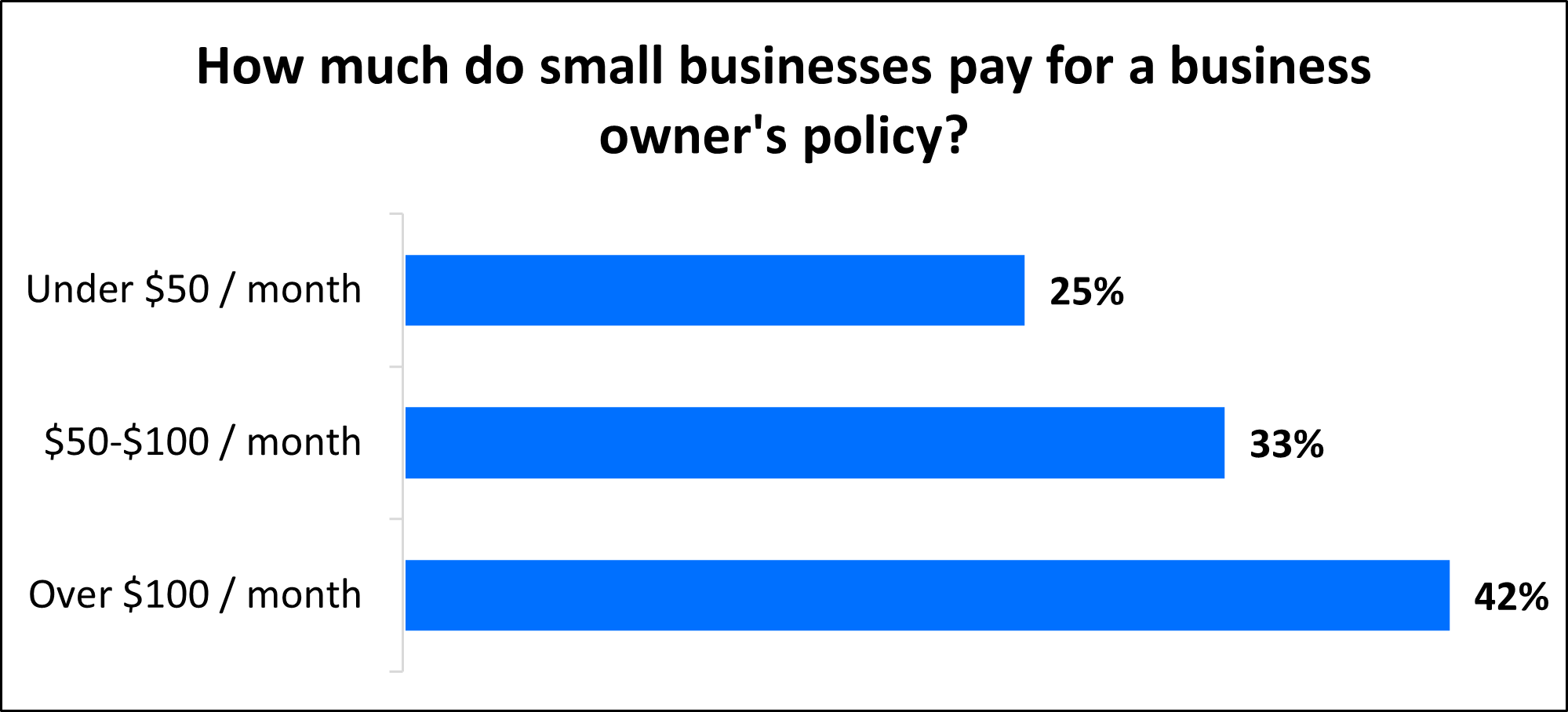
Annual premiums range from around $400 to over $6,000. 25% of our customers pay less than $50 per month for a business owner's policy, and 33% pay between $50 and $100 per month.
BOP costs depend on your industry and business risks, your business property value, and the BOP insurance options you choose.

Key factors that affect business owner's policy insurance costs
Here are the top factors that impact your business owner's policy costs:
Policy limits and deductible
Most small businesses (79%) choose a $1 million / $2 million business owner’s policy, with an average deductible of $500.
This means the policy has the following coverage limits:
- $1 million per occurrence limit: Policy pays up to $1 million on any single claim
- $2 million aggregate limit: Policy pays up to $2 million on all claims during the policy period (usually one year)
- $500 deductible: The policyholder must pay the deductible of $500 before collecting on a claim
18% of TechInsurance customers choose the second-most popular option, a policy with $2 million / $4 million liability limits.
Startups with expensive equipment or a large office space should consider higher policy limits to match the potential cost of damaged property. Higher limits cost more, but you can also receive a higher payout on a claim.
Selecting a higher deductible can help you save money on your premium. Keep in mind, however, that this should be an amount you can easily afford, as you must pay the deductible before receiving compensation for a claim.
Speak with a licensed insurance agent if you have any questions about BOP coverage, other policies, or riders that can be added to supplement your coverage.
Location
Your business location is one of the factors that determines how much you'll pay for a BOP.
For example, a small shop in rural Maryland would cost much less to insure than a similar shop in urban New York.
Location can impact your costs for a few reasons:
- State laws and regulations, which determine the type and amount of insurance a business must carry.
- Some locations have higher risks than others, including crime, natural disasters, or proximity to flood-prone bodies of water. You'll likely pay more if your business is in an area with location-based risks.
- Local healthcare and property repair costs. When costs are higher, you are likely to see higher insurance rates as well.
BOP costs for TechInsurance customers vary across our top states, as outlined in the chart below:
State | Business owner's policy (BOP) insurance cost |
|---|---|
$79 per month | |
$84 per month | |
$105 per month | |
$84 per month | |
$71 per month | |
$102 per month | |
$97 per month | |
$79 per month | |
$97 per month | |
$70 per month |
Commercial property value
The cost of the commercial property insurance portion of a BOP depends largely on the value of your business property, your business location, and the coverage you elect to carry.
These are the main factors that determine the cost of property coverage included in a BOP:
- The value of your business personal property (BPP). You'll need a cost estimate of your business's personal property before purchasing coverage. This estimate will help you get the right amount of coverage to pay for stolen, damaged, or destroyed items.
- Replacement value versus actual cash value. With a BOP, you can insure your property for its replacement value (retail cost), or save money by insuring it for its actual cash value (the depreciated value of used goods).
- Location and property age. Older buildings often cost more to insure because they're more susceptible to damage and disrepair. Additionally, if your business is located in an area with higher risks, such as vandalism, fires, or hurricanes, this may also impact your costs.
- Endorsements. Also called riders, endorsements can extend the protection of a BOP for an additional monthly cost. For example, business interruption insurance covers lost income due to a temporary closure, while equipment breakdown insurance covers equipment that suffers a mechanical failure.
Remember that a BOP won't cover company vehicles or items outside your primary location. For property stored off-site, you'll need additional coverage.
Most states require commercial auto insurance for business-owned vehicles, while you'll need inland marine insurance to cover property transported to job sites.
Industry risks
Your industry significantly affects the general liability component of your BOP insurance costs.
Industries that have frequent public interactions or handle property that belongs to customers or clients generally pay more for general liability insurance.
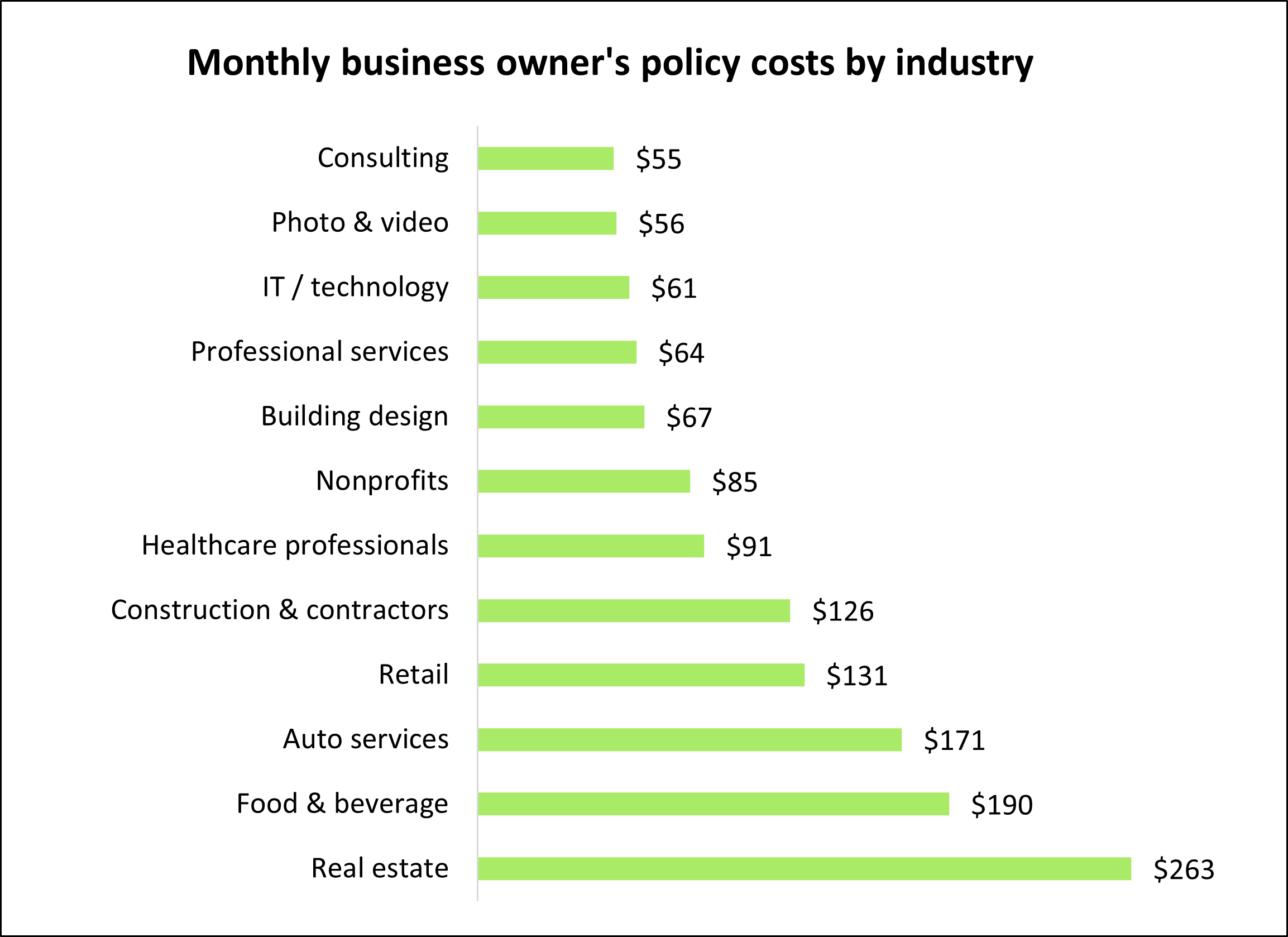
That includes retail shops, restaurants, and mechanics, where personal injuries to customers, property damage, and other third-party claims are common risks. These businesses will generally pay between $131 and $190 per month on average for a BOP.
Small businesses with fewer interactions with the public are often considered less risky by insurers. For example, consultants who offer services remotely or to a few select clients won't have to pay a lot for general liability coverage, only around $55 per month, on average.
Keep in mind, you may need to add bailee coverage if your business has temporary possession of items belonging to someone else.
Other industries, such as real estate and construction, have higher premiums due to their costly business equipment and a higher risk of third-party issues and incidents.
The following chart highlights how the type of business affects what you'll pay for a BOP:











Number of employees
The more employees you have, the more opportunities there are for an accident to occur or a client to file a lawsuit.
Even if you are a freelancer, independent contractor, or sole proprietor, it's a good idea to carry a BOP to protect yourself from the high costs associated with legal defense and/or medical expenses.
Your BOP only covers third-party injuries and won't cover employees who get hurt or sick on the job. You'll need a workers' compensation insurance policy to cover employees, which most states require for businesses that have employees.
Your claims history
Does my company need a business owner's policy?
A BOP is an incredibly important policy for small businesses that own business property or engage with the public.
Accidents can happen at any time. For example, a client could trip and get hurt. If the client sues, legal costs can escalate to the point where they could sink your business.
Even if no one outside your company visits your office, you could still face an expensive lawsuit. For example, businesses that post on social media could face a lawsuit if they engage in libel against a competing business.
When someone sues your business (even if you did nothing wrong), you'll have to pay legal defense costs, including attorney's fees. Additionally, you could end up paying a ton in a settlement or judgment.
General liability insurance covers these costs, including the expenses related to third-party personal injuries, property damage, and advertising injuries (such as libel or slander).
Commercial property insurance covers your building, computers, equipment, tools, and furniture in the event of a burglary, storm, or fire.
A BOP combines these policies into a single cost-saving bundle that protects your business against the most common lawsuits and losses.
Small businesses and contractors often pay only a small monthly premium for a BOP, depending on their level of risk and the value of their property.
How can you save money on a business owner’s policy?
Purchasing a business owner’s policy is already one of the best ways to get affordable commercial insurance.
To save money, your company can also:
Pay your annual premium in full
When you purchase liability coverage, you can pay your premium in monthly or annual installments. The annual premium often costs less than paying month by month.
Choose your office carefully
Commercial property insurance premiums are higher for older buildings, larger properties, and those lacking recent updates. Other factors include the distance to the nearest fire department, access to fire hydrants, and the quality of the fire department.
Personalize your coverage options
It's important to pick the coverage options you need without overpaying for coverage you don't.
A licensed insurance agent can help you find the right insurance policies for your business's unique risks and your budget.
Choose an actual cash value policy
An actual cash value policy insures items for their depreciated value (the value of the used item). A replacement cost policy covers the cost of a brand-new replacement item. Insurers charge more for replacement cost policies.
Manage your risks
Companies with no prior claims can expect lower insurance rates. Small business owners can avoid claims by implementing a risk management plan that reduces bodily injury, theft, advertising injury, and other risks.
Your risk management plan should include:
- Installation of sprinkler systems and fire alarms
- Installation of a security system
- Strict protocol for social media posts
- Removal of loose rugs that could trip visitors
- Preparation for natural disasters, such as flooding

Liability claims can be a threat to your business. If you’re accused of injuring someone, damaging property, or causing other harm it could easily turn into a costly lawsuit. That’s why it's important to have the right insurance protection in place to cover a range of potential liability risks.

How do you buy insurance with TechInsurance?
TechInsurance is a trusted insurance expert for small businesses, including contractors and consultants, with extensive knowledge of the IT sector and beyond.
We help business owners compare insurance quotes from top-rated carriers, buy policies based on your business needs, and manage your insurance coverage online.
By completing TechInsurance's easy online application today, you can compare free business owner's policy quotes from top-rated U.S. carriers. TechInsurance insurance agents are available to help answer any questions you may have about a BOP and additional coverages.
Once you find the right types of insurance policies for your small business, you can begin coverage in less than 24 hours and get a certificate of insurance for your small business.
Explore reviews from our customers
Learn more about other business insurance costs
Insurance premiums vary based on the policies a business buys. View our small business insurance cost overview or find out the average costs for other common types of business insurance policies.