




How much does commercial property insurance cost?
The average premium for commercial property insurance is $108 per month. However, your coverage limits, the size and condition of your building, and property value affect the exact cost of this policy, among other factors.
What is the average cost of commercial property insurance?
Regardless of insurance policy limits, the average cost of commercial property insurance for a small business is $108 per month. Annual insurance premiums can range from under $350 to over $15,000 per year.
Property insurance premium ranges are influenced by a variety of factors. One of the most significant factors is the type of property being insured. Smaller, rented storefronts will cost significantly less than owned multistory office parks.
These estimates were derived from an analysis of the median cost across thousands of insurance policies purchased by TechInsurance's small-business customers. The median cost offers a more accurate estimate of what your business is likely to pay than the average cost of business insurance because it excludes outlier high and low premiums.
If you have business property but do not own or rent an office location, you can insure your commercial goods with business personal property (BPP) coverage. A BPP can be added to a general liability policy as an endorsement, and is a popular option for home-based businesses.
Common commercial property insurance premiums for TechInsurance customers
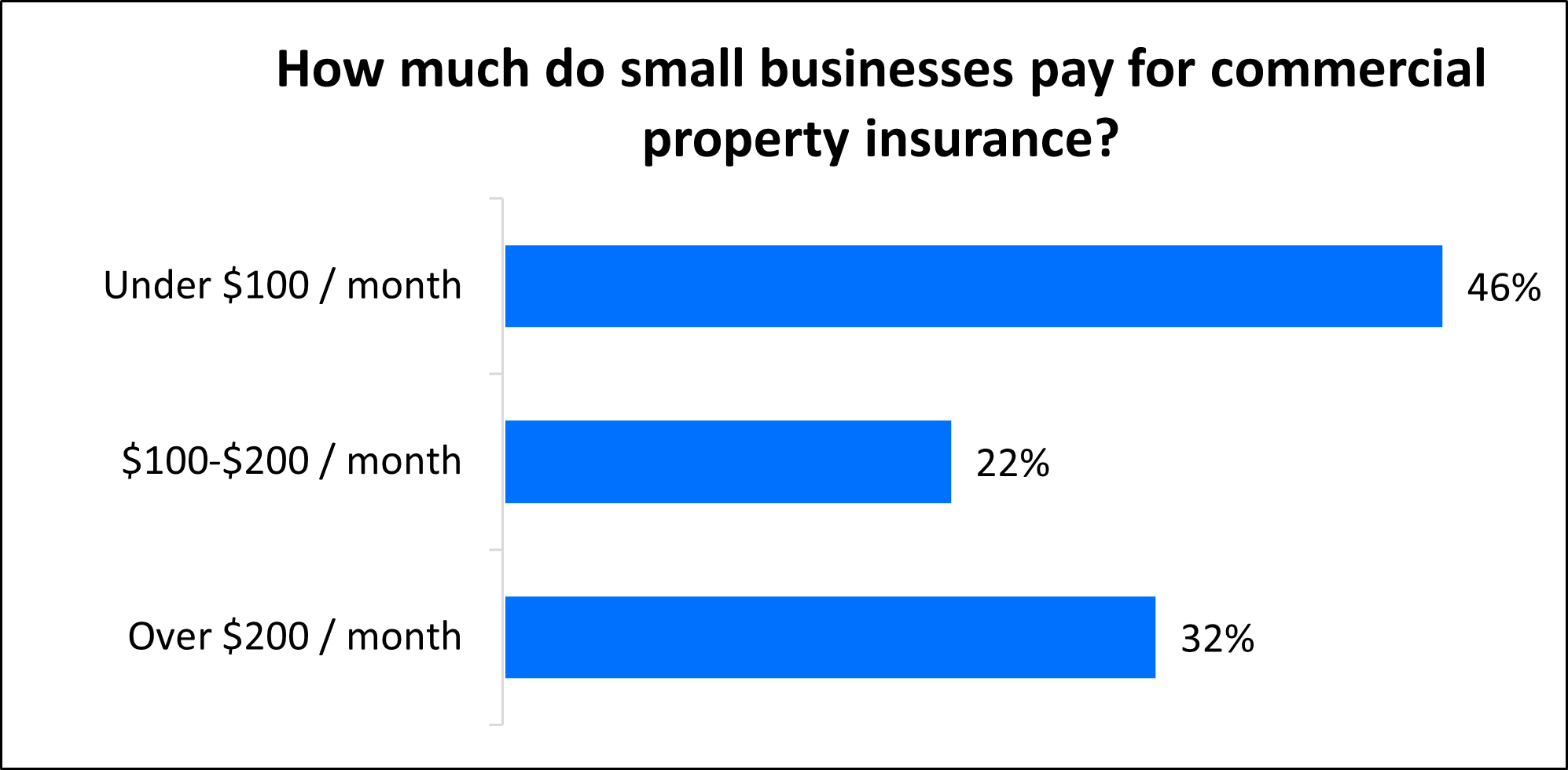
46% of TechInsurance customers pay less than $100 per month for commercial property insurance, and 22% pay between $100 and $200 per month. Annual premiums can range from under $350 to over $15,000 per year.
Commercial building insurance costs vary depending on the value of your property, your risks, and the types of coverage you choose.

Key factors that affect commercial property insurance costs
Here are the top factors that impact your commercial property insurance costs:
Industry
Your industry will affect your commercial property insurance rates. Generally, high-risk industries will pay higher premiums than low-risk industries.
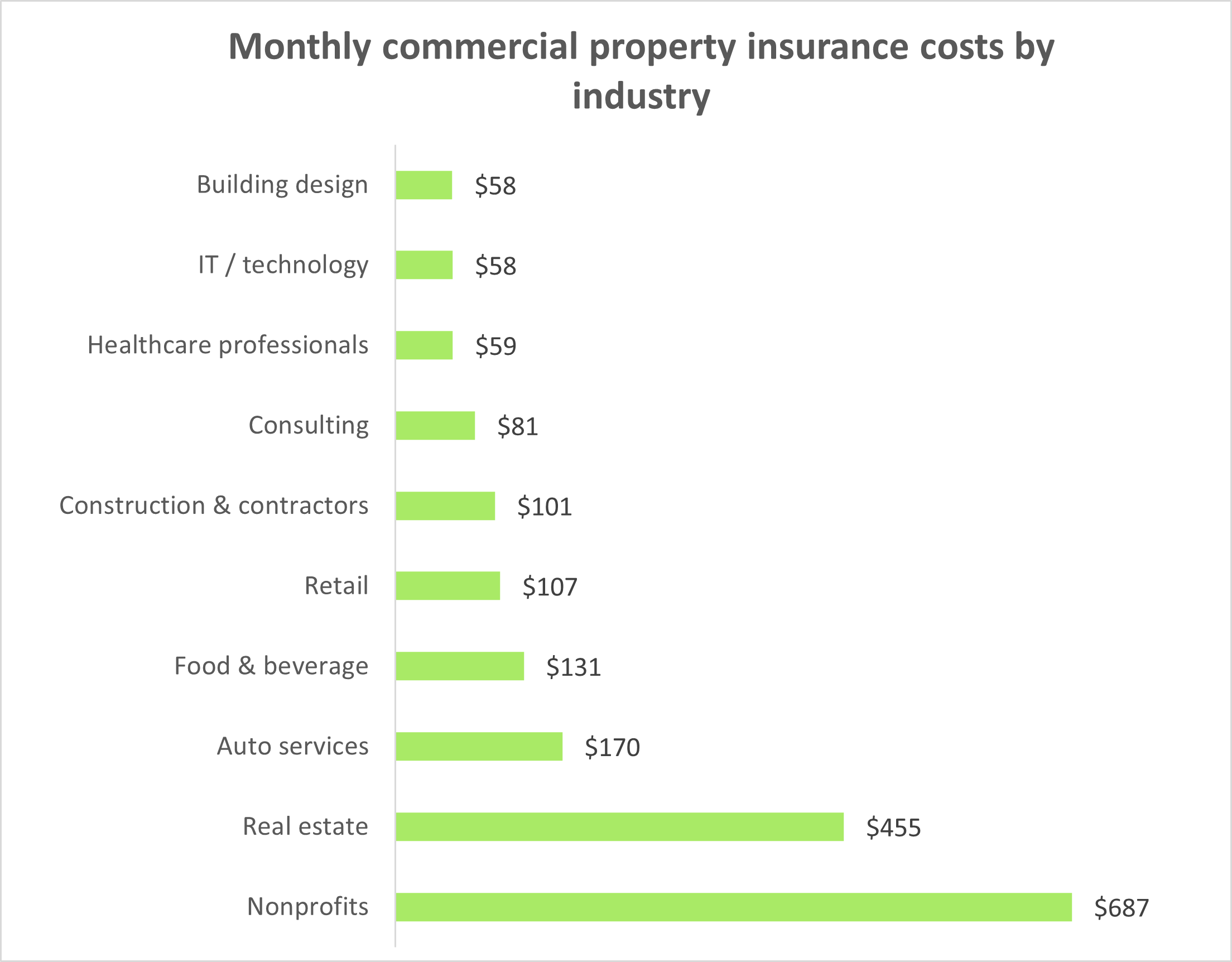
For example, businesses in higher-risk industries, such as auto service businesses and real estate companies, will likely have higher foot traffic and exposure to the general public. This leads to higher insurance costs than for lower-risk businesses, such as IT consultants.
Nonprofits often rely on volunteers (who are less vetted than employees) and host community events, which is why they pay a higher average premium at $687 per month. On the other hand, building designers often work in closed offices and have minimal foot traffic and interaction with the public, lowering their costs.
Property managers may require businesses in certain industries to carry commercial property coverage before they'll sign a lease agreement.
The following chart illustrates how the type of business affects what you'll pay for property insurance.
Policy limits and deductible
Businesses that own expensive equipment or an office should consider higher policy limits to match the potential cost of damaged property. Higher limits cost more, but you can also receive a larger payout on a claim.
Because bundles combine two common policies at a discount, most TechInsurance customers choose a business owner's policy (BOP). A BOP includes both property insurance and general liability insurance, which protects against the risks of working with clients and customers.
Most of TechInsurance's small business customers (87%) choose a $1 million / $2 million business owner’s policy, which means the policy has:
- $1 million per occurrence limit: Policy pays up to $1 million on any single claim
- $2 million aggregate limit: Policy pays up to $2 million on all claims
Policies with lower limits will cost less. You can also save money by paying a higher deductible. However, high deductible options may cost more in the long run.
The average policy deductible for a commercial property policy is $1,000.
Location
If your business is located in an area with heavy foot traffic or where many customers pass through, your risk increases.
Your insurance company will evaluate your business location to determine which environmental risks your company may face. Buildings at risk for a natural disaster, such as a hurricane, flood, wildfire, earthquake, or tornado, will cost more to insure.
Factors that affect property insurance premiums include:
- Crime rates
- Proximity to emergency services
- Real estate values
- Local regulations, such as building codes
Property insurance premiums are typically higher in areas with frequent break-ins and severe weather. Some insurers have even stopped writing policies in areas prone to certain natural disasters due to their increasing frequency and severity.
Here are some examples of the average cost of commercial building insurance across different states:
State | Property insurance cost |
|---|---|
$121 per month | |
$102 per month | |
$133 per month | |
$112 per month | |
$55 per month | |
$109 per month | |
$208 per month | |
$84 per month | |
$163 per month | |
$38 per month |
Types of perils covered
Commercial property policies generally include a list of named perils they cover, such as:
- Burst pipes
- Theft
- Fire
- Vandalism
- Wind and hail
It's important to know your specific risks, because named perils coverage only covers the specific losses listed in your policy.
You can elect to purchase open perils coverage, which protects your business against all losses except those specifically excluded in the policy. However, it is typically more expensive to carry open perils coverage than to name specific perils.
Exclusions typically include hurricanes, floods, earthquakes, and employee theft, though you can purchase endorsements for risks that aren't covered by your policy.
Building size and age
Older buildings, larger properties, and buildings that lack recent updates will cost more to insure.
The premium will increase with the amount of square footage. For example, a large retail furniture store will cost more than a small consulting office.
Age is also a significant factor, as older buildings tend to experience more frequent breakdowns and issues. For example, the pipes could fail, causing serious water damage to your business property.
Commercial property value
Claims history
Property valuation method
You can pick from two methods of calculating the property value when purchasing your property insurance:
- Actual cash value (ACV) coverage would pay the item's depreciated value.
- Replacement value coverage pays for a brand-new replacement.
ACV coverage costs less than replacement cost coverage because the cost of replacing a new item is lower than paying cash for a used item.
Security and safety measures
Having security and safety measures in place can help lower your insurance rates. For example, implementing a multicomponent security plan that includes multiple video cameras and commercial-grade locks can help prevent vandalism, especially if your business is in a high-crime environment.
In addition, you can minimize the risk of a fire and the damage it can cause by installing a sprinkler system and a fire extinguisher in the office.
If your business handles toxic materials or engages in risky or dangerous activities, your property insurance costs will likely increase. You may want to consider environmental insurance to manage toxin and pollution-related risks.
Age and equipment type
Expensive industrial machinery, such as HVAC systems, will cost more to insure than less expensive equipment, such as leaf blowers. Additionally, you may pay higher insurance costs if your equipment is difficult to repair or susceptible to equipment breakdown.
Commercial property insurance only covers equipment at your business property. If you plan to travel and bring your equipment to different work sites, you may need inland marine insurance or tools and equipment coverage. These policies protect your tools and other property while in transit, at a job site, or when stored off-site.
It often costs more to insure older items, or coverage may be difficult to find. Tools and equipment insurance typically covers items less than five years old.
Age of major systems
The age of your building's systems can impact your property insurance costs. Older systems are often more likely to leak, corrode, or even start a fire.
When writing a commercial property policy, insurance providers will consider the age of your electrical, plumbing, and HVAC systems, roof, and other expensive features. Your policy provider might add an exclusion due to certain risks, such as water or fire damage.
Conversely, you can expect lower rates if your building systems are newer and well-maintained.
Building construction and materials
Renting or owning a building with high-quality, noncombustible materials can better withstand potential damage. This quality construction decreases possible risks and claims, which reduces costs.
Insurance providers often offer lower rates for buildings made of masonry, brick, concrete, and steel compared to buildings with wood frames or vinyl siding.
Type of occupancy
From an insurance standpoint, occupancy involves how the building is used and what is stored inside.
Closed offices with limited public access, where employees work at computers during daytime hours, such as cybersecurity companies and advertising agencies, pay lower commercial property rates.
Buildings with high foot traffic and long public hours, as well as expensive, flammable inventory, will cost more to insure. Examples include restaurants and convenience stores.
Your business's location in a building that also houses high-risk businesses may increase your rates, too.
How can you save money on commercial property insurance coverage?
Small businesses can also save money on commercial property insurance by:
Making annual premium payments
When you purchase a commercial property policy, you can pay your premium in monthly or annual installments. The annual premium often costs less than paying month by month.
Opting for an actual cash value policy
An actual cash value policy insures items for their depreciated value (the value of the used item). A replacement cost policy covers the cost of a brand-new replacement item. Insurers charge more for replacement value policies.
Managing your business risks
Companies with no previous claims on their insurance can expect to pay less for business insurance. Business owners can help keep their claims history clean with a risk management plan. This could include:
- Installation of fire alarms and fire suppression systems
- Installation of security systems, especially in high-risk locations
- Employee training on fire extinguishers and similar equipment
- Company protocol that secures valuable equipment
Bundling insurance policies
Bundling policies is a great way to save money on coverage your business needs. Small, low-risk businesses can purchase a business owner's policy, which combines a commercial property policy with a general liability policy.
Larger, riskier businesses often do not qualify for a BOP, but can opt for a similar policy called a commercial package policy (CPP). A CPP is a more flexible option for larger businesses with more complicated insurance needs.
Choosing a higher deductible
Higher deductibles often decrease your insurance premiums, meaning you're paying less overall for your coverage.
However, it's important to pick deductibles that your business will be able to afford to pay out-of-pocket in the event of a claim, or your insurance company will likely not cover the claim until the deductible is paid.

Liability claims can be a threat to your business. If you’re accused of injuring someone, damaging property, or causing other harm it could easily turn into a costly lawsuit. That’s why it's important to have the right insurance protection in place to cover a range of potential liability risks.

How do you buy insurance with TechInsurance?
TechInsurance is a trusted insurance expert for small businesses, including startups and independent contractors, with extensive knowledge of the IT sector and beyond.
We help small business owners compare quotes from top-rated insurance carriers, purchase policies tailored to their business needs, and manage coverage online.
By completing TechInsurance's easy online application today, you can get free quotes for commercial property insurance and other types of insurance. Our insurance agents are available to help answer any questions you may have on the different types of coverage.
Once you find the right coverage options for your small business and purchase your policies, you'll receive a certificate of insurance. This coverage will help you run your business with peace of mind, knowing that you're protected.
Explore reviews from our customers
Learn more about business insurance costs
Insurance premiums vary based on the types of policies a business buys. View our small business insurance cost overview or find out the average costs for other common types of business insurance policies.
The figures on this page reflect the median cost of policies purchased by 100,000 of TechInsurance's customers. Most of our customers have been in business for five years or less, employ fewer than five people, and generate annual revenues ranging from about $50,000 to over $200,000.