




How much does commercial umbrella insurance cost?
Commercial umbrella insurance raises your policy limit in $1 million increments, providing your business with more compensation per claim. The limits you choose and your level of risk both affect the cost of this policy. Additional factors include your business location, annual income, and the amount of coverage you purchase.
What is the average cost of commercial umbrella insurance?
On average, commercial umbrella liability insurance costs $86 per month. Annual premiums range from under $400 to over $7,000.
Our figures are sourced from the median cost of policies purchased by TechInsurance customers from leading business insurance companies. The median provides a better estimate of what your business is likely to pay because it excludes outlier high and low premiums.
A commercial umbrella policy boosts the policy limits on your primary insurance policies, such as:
- General liability insurance
- Employer's liability insurance (part of workers' compensation insurance)
- Hired and non-owned auto insurance (HNOA)
Your insurance costs depend on the coverage you purchase, annual revenue, the size of your business, and other factors that affect the cost of your underlying policies. Insurers typically require you to carry a minimum amount of underlying liability coverage before you can purchase an umbrella policy on top of it.
How much coverage you need to purchase can vary, as some clients require small businesses to carry umbrella coverage with limits above $2 million.
Common umbrella liability premiums for TechInsurance customers
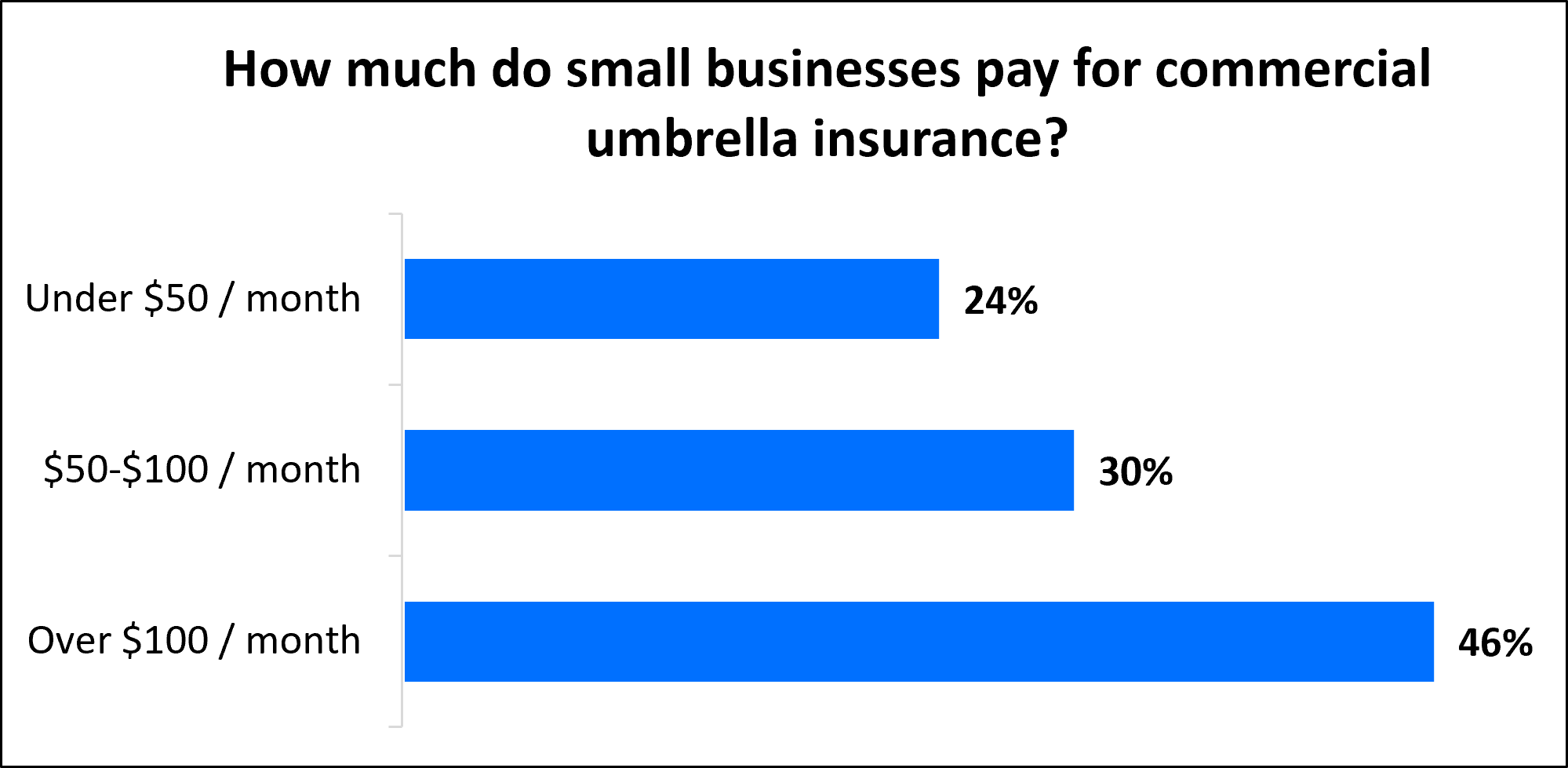
The average cost of umbrella insurance for TechInsurance's small business customers is $86 per month. 24% of customers pay less than $50 per month for umbrella insurance, and another 30% pay between $50 and $100 per month.
Business owners pay an average annual premium of $400 to $7,000.
Umbrella coverage costs vary depending on your risks and the amount of coverage you choose.

Key factors that affect umbrella insurance costs
Umbrella liability insurance serves as an extra layer of protection by providing additional coverage on common insurance policies, such as a commercial auto insurance policy.
Your insurance provider will look at the following factors when calculating your commercial umbrella insurance rates:
Policy limits
Business umbrella insurance typically increases the underlying limit of your policy in $1 million increments. The higher you raise your policy limit, the more you’ll end up spending on umbrella insurance.
Most TechInsurance customers purchase a $1 million / $2 million umbrella insurance policy. This includes:
- $1 million per-occurrence limit: While the policy is active, the insurer will pay up to $1 million to cover any single claim
- $2 million aggregate limit: During the lifetime of a policy (usually one year), the insurer will pay up to $2 million to cover claims
It costs most small businesses about $40 per month per $1 million of additional coverage purchased. For example, increasing your limits on a general liability policy from $2 million to $5 million would likely cost you an additional $120 per month on top of the cost of the underlying policy.
Commercial umbrella coverage boosts your insurance limits across several liability policies. To extend only one policy, you may want to consider excess liability insurance.
When buying insurance, assess your potential liabilities to determine whether higher limits are worth the additional cost. A TechInsurance insurance agent can help you secure the right amount of coverage for your risks and contractual requirements.
Claims history
Any liability insurance claims you’ve made in the past will likely result in higher premiums in the future. The fewer insurance claims you have made in the past, the lower your insurance premiums will be.
Your claims history for any underlying policy, such as general liability coverage, could affect your umbrella insurance rate as well.
Industry risks
Your industry and the type of work you do have the biggest impact on your umbrella insurance premium.
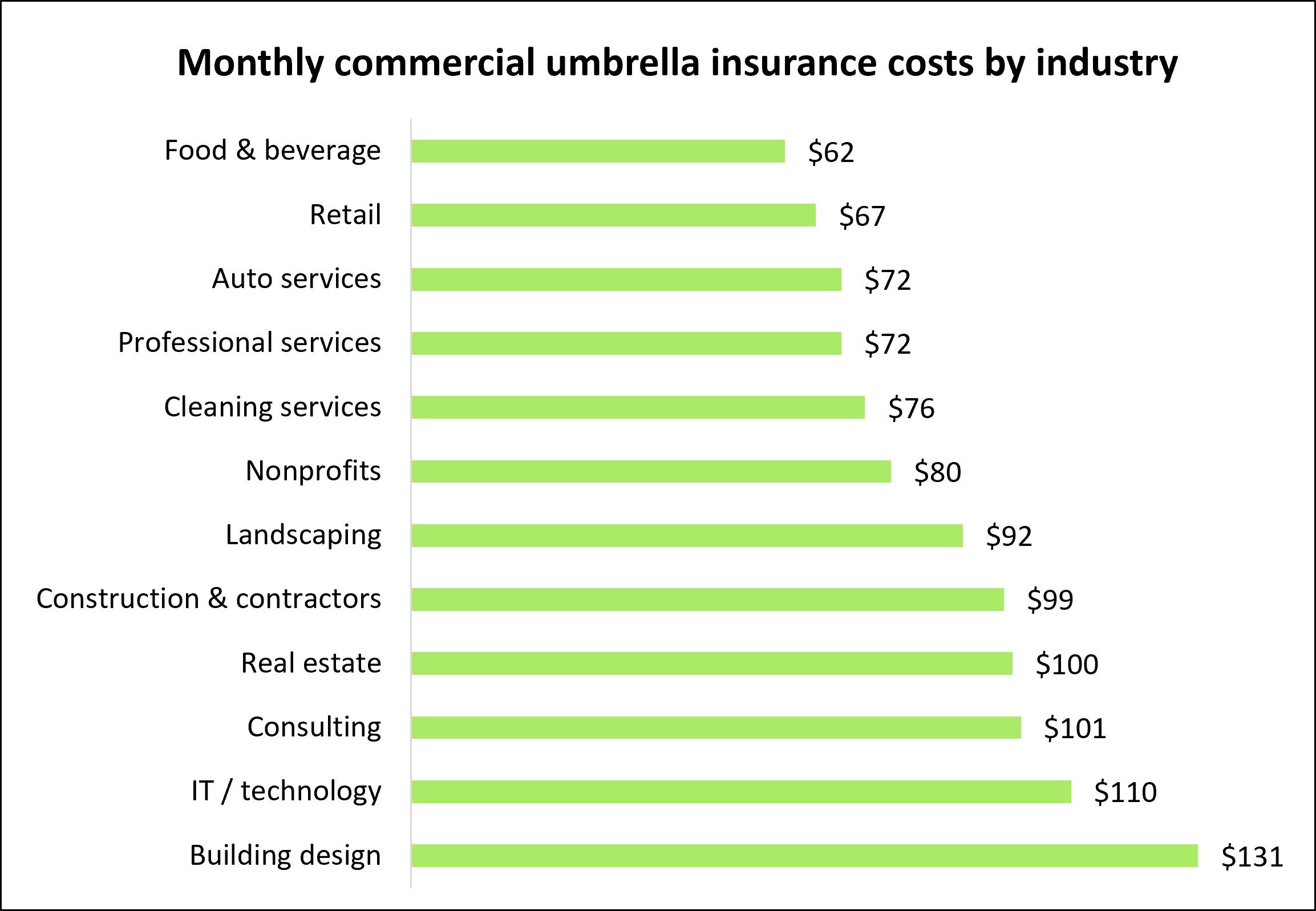
Businesses that are vulnerable to costly lawsuits often require higher limits and pay higher premiums for umbrella insurance. Building designers, for example, face many potential injury lawsuits and pay an average of $109 per month for umbrella insurance. On the other hand, retailers only pay an average of $67 per month. In certain industries, such as construction, clients often stipulate higher liability limits, which can also increase costs.
Some industries may be required by state regulations to carry general liability insurance. Other businesses, such as real estate, insurance, or healthcare, may need to carry professional liability insurance (also called errors and omissions insurance) before applying for licensure.
The graph below highlights how the type of business affects what you'll pay for a commercial umbrella insurance policy.
Top industries we insure











Business size and annual revenue
It's simple: The bigger your business is and the higher your revenue is, the more opportunities there are for mishaps.
For example, the more employees you have behind the wheel, the greater the chances of a car accident. And if you or an employee is in an accident and exceeds the coverage limits of your commercial auto policy, you can count on umbrella insurance for extra coverage. This includes medical expenses, attorney fees, and other legal defense costs (if another driver sues).
Sole proprietorships and limited liability companies (LLCs) generally see lower premiums than small businesses with employees due to lower relative risks.
Location
Your business location has an impact on your commercial umbrella coverage costs. Additionally, state laws mandate how much commercial auto insurance you need to carry and whether or not your business needs workers' compensation insurance.
Crime, traffic, population density, weather, and other factors strongly impact liability insurance premiums. A small business in California, for example, will pay higher premiums than a similar business in rural Texas.
Your cost of living significantly affects premiums. Small business insurance costs more in areas that have higher property repair costs, medical bills, lost wages, litigation, and other claim-related expenses.
Types of policies purchased
Care of client property
Regularly handling client and customer property increases your risk of a property damage lawsuit. Insurance rates increase proportionally with the risk that you or an employee will damage or misplace someone else's property.
You'll need bailee insurance to cover client property in your care, custody, or control, which is otherwise excluded.
For example, a computer repair business will likely pay more compared to other retail stores for a business umbrella policy due to the risk of handling customers' laptops and accessories.
Does my company need a commercial umbrella policy?
Your umbrella insurance expands the coverage limits of your underlying policies in $1 million increments.
Umbrella coverage will kick in when your underlying policies reach their limits. This coverage could potentially save your business from devastating losses.
Other reasons why small businesses would need to invest in this coverage include:
Third-party injury risks
Most businesses, especially those with public-facing storefronts, can be faced with a third-party bodily injury. The legal fees and medical expenses resulting from these incidents could escalate to the point of seriously harming your business.
When someone sues your business, it can be financially devastating. If you lose the lawsuit, you may be held liable for paying a fortune in a court-ordered judgment or a settlement.
Claims related to personal and advertising injury
Your business may face lawsuits or damages, even if personal injuries or damage to third-party property is not a factor.
For example, marketing businesses could face a lawsuit if they post content that doesn't belong to them or make a false claim about a competitor. Lawsuits involving claims of advertising injuries, such as libel or slander, can have a significant impact on your business.
Contractual requirements
Small business owners often need to purchase umbrella insurance to fulfill contracts that require higher limits and to protect against the most expensive kinds of claims, such as an auto accident involving multiple vehicles.
Client contracts often require a $5 million policy limit. If you encounter this sort of contractual requirement, an umbrella policy with a $3 million limit can be added to a business liability policy with a $2 million limit to reach the requested total.
How can you save money on commercial umbrella coverage?
There are things you can do to keep your umbrella insurance policy costs low.
A couple of strategies include:
Pay your annual premium upfront
You can usually pay your premium in monthly or annual installments. While it might be tempting to pay monthly premiums, consider paying the full premium instead. Many insurers offer discounts for businesses who pay this way.
Manage your business risks
If your business has no claims history, you’ll likely pay lower insurance rates. An effective way to reduce claims is to create a comprehensive risk management plan.
For example, you might:
- Remove physical hazards in your office to reduce bodily injuries
- Implement a security system
- Develop a detailed training program for employees
- Clearly display procedure checklists
- Create rules for posting to your business’s social media accounts
- Specify and limit who can drive company-owned vehicles to minimize claims on your auto liability policy
What exclusions are there to a commercial umbrella policy?
You can only buy umbrella insurance to extend your general liability, commercial auto, or employer’s liability insurance policies. And you must purchase an underlying policy before you can buy umbrella coverage—it can’t be purchased in place of the underlying policy.
Umbrella coverage largely has the same exclusions as the underlying policies, including intentional wrongdoing and criminal acts. Some umbrella insurance options offer extra protection or drop down to cover gaps.

Liability claims can be a threat to your business. If you’re accused of injuring someone, damaging property, or causing other harm it could easily turn into a costly lawsuit. That’s why it's important to have the right insurance protection in place to cover a range of potential liability risks.

How do you buy insurance with TechInsurance?
TechInsurance is a trusted insurance expert for small businesses, including contractors and consultants, with extensive knowledge of the IT sector. We help business owners compare quotes from top-rated insurance carriers, buy policies based on your business needs, and manage coverage online.
By completing TechInsurance's easy online application today, you can compare free quotes for umbrella insurance and other types of insurance from top-rated U.S. carriers. TechInsurance insurance agents are available to help answer any questions you may have.
Once you find the right policies for your small business, you can begin coverage in less than 24 hours and get a certificate of insurance for your small business.
Explore reviews from our customers
Learn more about other business insurance costs
Insurance premiums vary based on the policies a business buys. View our small business insurance cost overview or find out the average costs for other common types of business insurance.