




How much does employment practices liability insurance (EPLI) cost?
The average premium for employment practices liability insurance is $257 per month. However, your coverage limits, industry risks, and number of employees affect the exact cost of this policy, among other factors.
What is the average cost of employment practices liability insurance?
Regardless of insurance policy limits, the average cost of employment practices liability insurance (EPLI) for a small business is $257 per month. Most businesses pay around $750 to over $14,000 per year, depending on their unique business risks.
These estimates were derived from an analysis of the median cost of thousands of insurance policies purchased by TechInsurance's small business customers from leading business insurance companies. The median cost offers a more accurate estimate of what your business is likely to pay than the average cost of business insurance because it excludes outlier high and low premiums.
Common EPLI insurance premiums for TechInsurance customers
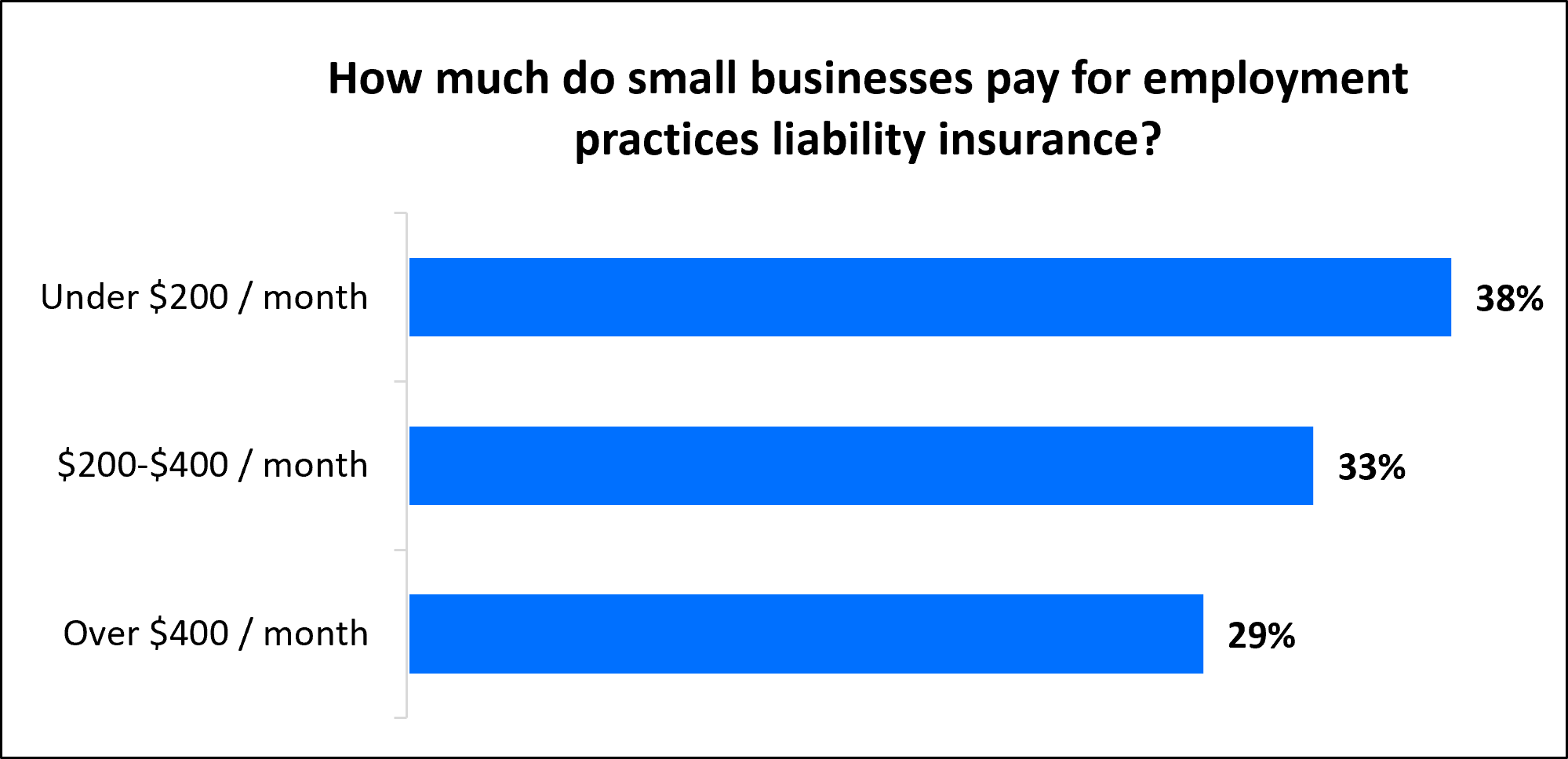
Techinsurance's small business customers pay an average of $257 per month for EPL coverage. 38% of customers pay $200 or less per month for coverage, while another 33% pay between $200 and $400 monthly. Most business owners pay around $750 to more than $14,000 per year.
Costs vary for small businesses depending on their risk profile, number of employees, past claims history, and other factors, including lawsuits filed by current or former employees alleging defamation, breach of an employment contract, and similar claims.

Key factors that affect EPLI insurance costs
Employment practices liability insurance, a type of management liability insurance, covers your small business in case you're faced with an employee lawsuit over a violation of their rights, such as wrongful termination, age discrimination, or sexual harassment. This includes legal fees and other related expenses.
Insurance providers will take into account several factors when determining the cost of your EPLI premium, including:
Policy limits and deductible
EPLI policy limits vary significantly. Each policy has a per-occurrence limit and an aggregate limit:
- Per-occurrence limit: While the policy is active, the insurer will pay up to this amount to cover any single claim.
- Aggregate limit: During the policy period (usually one year), the insurer will pay up to this amount to cover all claims.
Policies with lower limits will cost less, but you should make sure you buy enough coverage to cover a lawsuit. You can also save money by paying a higher deductible. However, high deductible options may cost more in the long run.
The average policy deductible for an EPLI policy is $10,000.
The coverage amount you need depends on your business risks. You want enough coverage to protect against a potential lawsuit, without paying for more than you need. Speak with a licensed insurance agent if you're unsure which deductible and limits are right for your business.
Industry risks
Your industry is another factor that will impact your employment practices liability insurance costs. Industries with a higher rate of employment-related claims generally pay a higher premium, while lower-risk industries enjoy lower rates.
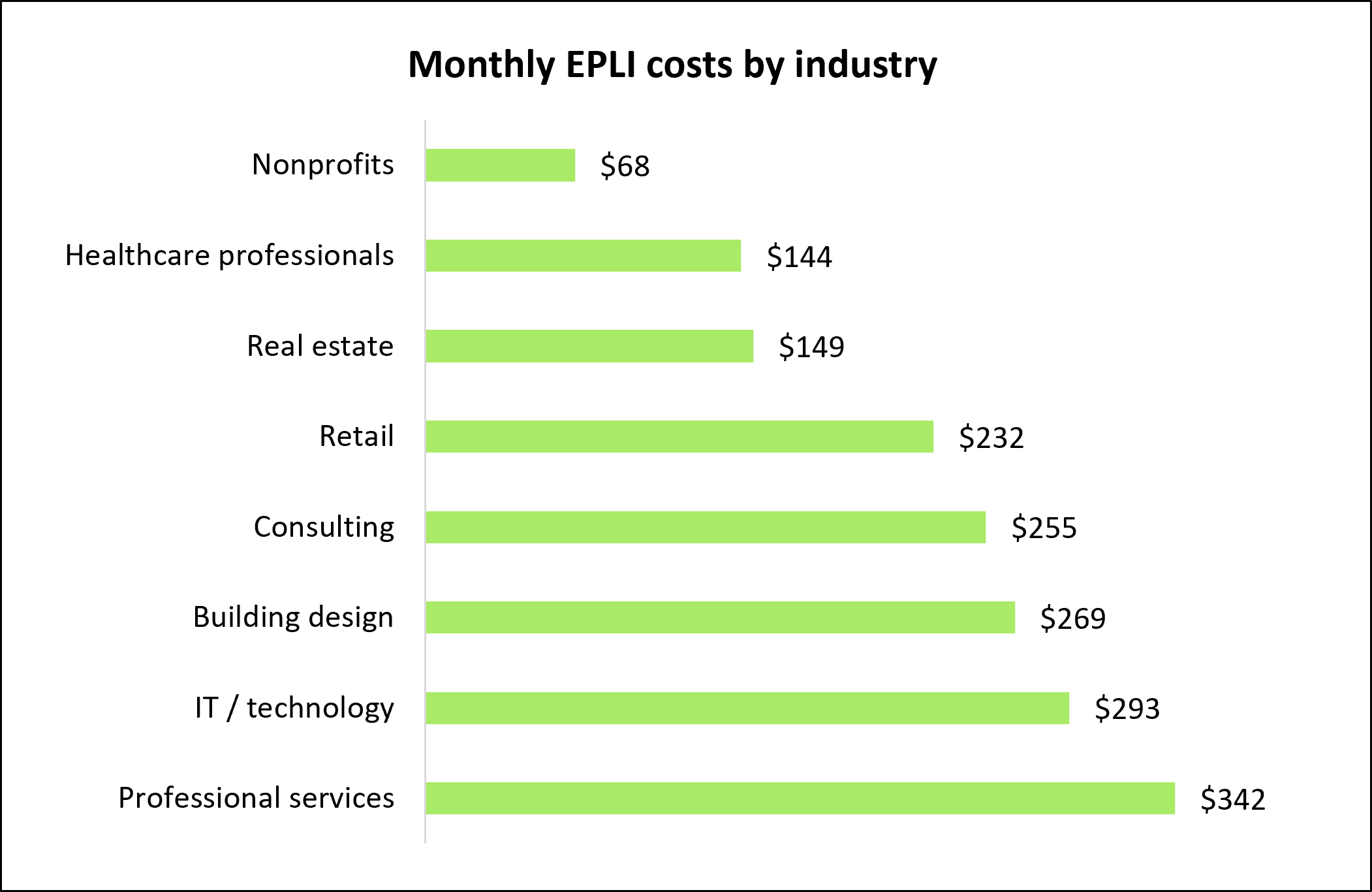
For example, businesses in industries with a reputation for filing more claims, such as professional services and information technology businesses, will likely have higher liability insurance costs, paying $342 per month and $293 per month, respectively.
These industries often face more frequent lawsuits related to employees' rights violations, so insurance providers factor this into underwriting.
Lower-risk businesses with historically fewer claims, such as nonprofits, will pay a much lower rate at only $68 per month.
The following chart illustrates how the type of business affects EPLI costs.











Number of employees
It's simple: The more employees you have, the more opportunities there are for one of them to file a lawsuit against your management team.
Employee interactions can create disputes related to hiring, promotion, pay, discipline, or termination. More employees mean more opportunities for claims involving discrimination, harassment, wrongful termination, or other employment-related issues.
Because of the risks, businesses with larger workforces tend to pay higher EPLI premiums than those with only a few employees.
While an EPLI policy is recommended for most small businesses, most state laws require small business owners to carry workers' compensation insurance if they have employees, and commercial auto insurance if they have business-owned vehicles.
Location
Your business location plays a big role in your EPLI premium. Some states have stricter employee protection laws or higher rates of employment-related lawsuits, which increases risk for insurers.
That means businesses in these areas often pay more for coverage, such as:
- EPLI insurance in California is among the most expensive, largely due to the state’s extensive labor laws and high volume of employee claims.
- Higher claim rates and legal activity drive up EPLI costs for Florida employers.
- A famously litigious environment, New York businesses also tend to see higher EPLI costs.
- Strong employee rights protections contribute to above-average premiums in Massachusetts.
- While not as expensive as California or New York, Texas still has elevated claim activity that can impact premiums.
Businesses in states with fewer regulations or historically lower claim activity often benefit from more affordable EPLI insurance rates.
Employee turnover rate
Employee turnover rates can also impact your EPLI premium. Businesses with frequent hiring and firing are often considered higher risk because each employment change or addendum creates more opportunities for disputes.
High turnover can lead to claims of wrongful termination, discrimination, or retaliation. The increased likelihood of legal action makes insurance companies view these businesses as riskier to cover.
Companies with high turnover often pay more for EPLI insurance than those with stable, long-term workforces. Reducing turnover can lower your EPLI costs.
Claims history
Hiring and termination practices
Your business's hiring and termination practices can significantly affect your EPLI costs. Small businesses with inconsistent or poor documentation practices are more likely to face claims of discrimination, wrongful termination, or unfair hiring practices.
For example, skipping background checks, not following established termination procedures, or engaging in discriminatory hiring can increase the risk of legal claims and disputes.
Insurance providers see gaps in policies and procedures as warning signs that a business could face more frequent or claims. On the other hand, companies that maintain standardized, transparent, and well-documented hiring and termination processes are seen as lower risk and may pay less for coverage.
Annual income
Your annual business revenue is another factor that underwriters use to determine coverage premiums. In general, the higher your revenue, the more you may pay for coverage.
Higher revenue often signals a larger business with more risk, including more employees, greater visibility, and more complicated operational structures. As a result, higher revenue increases the likelihood of an employment-related claim.
Insurance companies may worry about larger payouts for higher-revenue businesses, as attorneys and employees may seek bigger settlements than with smaller companies.
For example, a very small retail store would likely pay less in an EPLI claim than a department chain with much higher revenue.
Risk management
Strong risk management practices can help lower your EPLI premium.
Clearly defined policies, comprehensive employee handbooks, and documented policy and procedures show your business takes compliance seriously.
Regular employee training, especially on anti-harassment, diversity, and workplace conduct, also helps reduce the likelihood of claims by protecting employees and reducing risk.
Create a safer, more respectful workplace, support a healthy culture, and qualify for lower EPLI premiums.
Does your small business need employment practices liability insurance?
Employment practices liability insurance is rarely required by state law, but it is exceptionally important when you have employees.
Workplace claims of sexual harassment are always a possibility. Employees may misread your motivations in decisions about hiring, firing, and promotions. For example, an employee could sue because they interpreted a failure to promote as discriminatory, and facing that legal battle will be expensive, even if you did nothing wrong.
If someone sues your business (even if it's a frivolous lawsuit), you'll have to pay legal defense costs, including attorney fees. If you lose the suit, you could end up paying a large amount in a court-ordered judgment or a settlement. EPLI covers all of these costs, potentially saving your business from bankruptcy.
Your coverage needs often depend on your business size and hiring risk. Very small businesses (also called micro businesses) can add EPLI as an endorsement to a business owner's policy (BOP).
Small businesses with a few dozen employees often elect to carry a standalone policy with higher limits. Bigger businesses with larger workforces, multiple locations, or higher employee turnover often carry broader coverage and larger limits.
Employment practices liability is a claims-made policy, which means that your policy must be kept active in order to file a claim.
How can you save money on EPLI coverage?
EPLI benefits both private companies and public companies by helping to pay for employment-related lawsuits. Regardless of business type, there are steps you can take to keep your employment practices liability insurance costs low.
A few strategies include:
Compare quotes by shopping around
Paying your annual premium in full
When you purchase a policy, you can pay your premium in monthly or annual installments. The annual premium often costs less than paying month by month.
Bundling policies
Some insurance providers allow small businesses to bundle their employment practices liability insurance policy with directors and officers insurance (D&O). This package usually costs less than purchasing each policy separately.
Managing your business risks
Companies with no prior insurance claims can expect to pay less for business insurance. Business owners can avoid claims with a risk management plan.
This could include:
- Hosting harassment prevention training to talk about what is and is not acceptable in the workplace
- Forming and maintaining a strong human resources department that regulates employee behavior and prevents workplace discrimination
- Establishing an employee handbook and educating those in leadership on important employment laws
- Quickly handling employee issues to prevent wage and hour claims
- Streamlining company protocols for what warrants employee hiring and firing
- Prioritizing responses to employee claims of harassment or violations of other rights

Liability claims can be a threat to your business. If you’re accused of injuring someone, damaging property, or causing other harm it could easily turn into a costly lawsuit. That’s why it's important to have the right insurance protection in place to cover a range of potential liability risks.

How do you buy insurance with TechInsurance?
TechInsurance is a trusted insurance expert for small businesses, including startups and independent contractors, with extensive knowledge of the IT sector and beyond.
We help business owners compare quotes from top-rated insurance carriers, buy policies based on your business needs, and manage coverage online.
By completing TechInsurance's easy online application today, you can get free quotes for EPL insurance and other types of insurance. Our insurance agents are available to help answer any questions you may have.
Once you find the right policies for your small business, you can begin insurance coverage in less than 24 hours and get a certificate of insurance for your small business.
Explore reviews from our customers
Learn more about business insurance costs
Insurance premiums vary based on the policies a business buys. View our small business insurance cost overview or find out the average costs for other common types of business insurance policies.