


How much does real estate insurance cost?
Key insurance policies and their expected costs for real estate businesses
Here are the top insurance policies and bonds bought by real estate service business owners and their average monthly costs:
- Errors and omissions insurance: $68 per month
- General liability insurance: $40 per month
- Workers' compensation insurance: $50 per month
- Commercial property insurance: $392 per month
- Commercial auto insurance: $160 per month
- Cyber insurance: $134 per month
- Commercial umbrella insurance: $95 per month
- Surety bonds: $21 per month
Our figures are based on the median policy cost for real estate service companies that request quotes through TechInsurance. The median provides a better estimate of your expected insurance costs because it excludes outlier high and low premiums.

Errors and omissions insurance costs for real estate businesses
Real estate businesses pay an average of $68 per month, or $815 annually, for errors and omissions insurance (E&O), also called professional liability insurance.
E&O policies cover the cost of client lawsuits over claims that your real estate services were negligent, of poor quality, or otherwise unsatisfactory.
For example, a client claims that their real estate broker failed to fulfill the requirements of their contract by misrepresenting the home in their listing. This results in lost sales and wasted time.
The client could sue over negligence and attempt to recoup their financial losses and other damages. In this instance, the realtor would need professional liability coverage to avoid paying legal and settlement expenses out of pocket.
Below is the average cost of E&O insurance for real estate companies that buy from TechInsurance:
Premium: $68 per month
Policy limits: $1 million per occurrence; $1 million aggregate
Deductible: $1,000
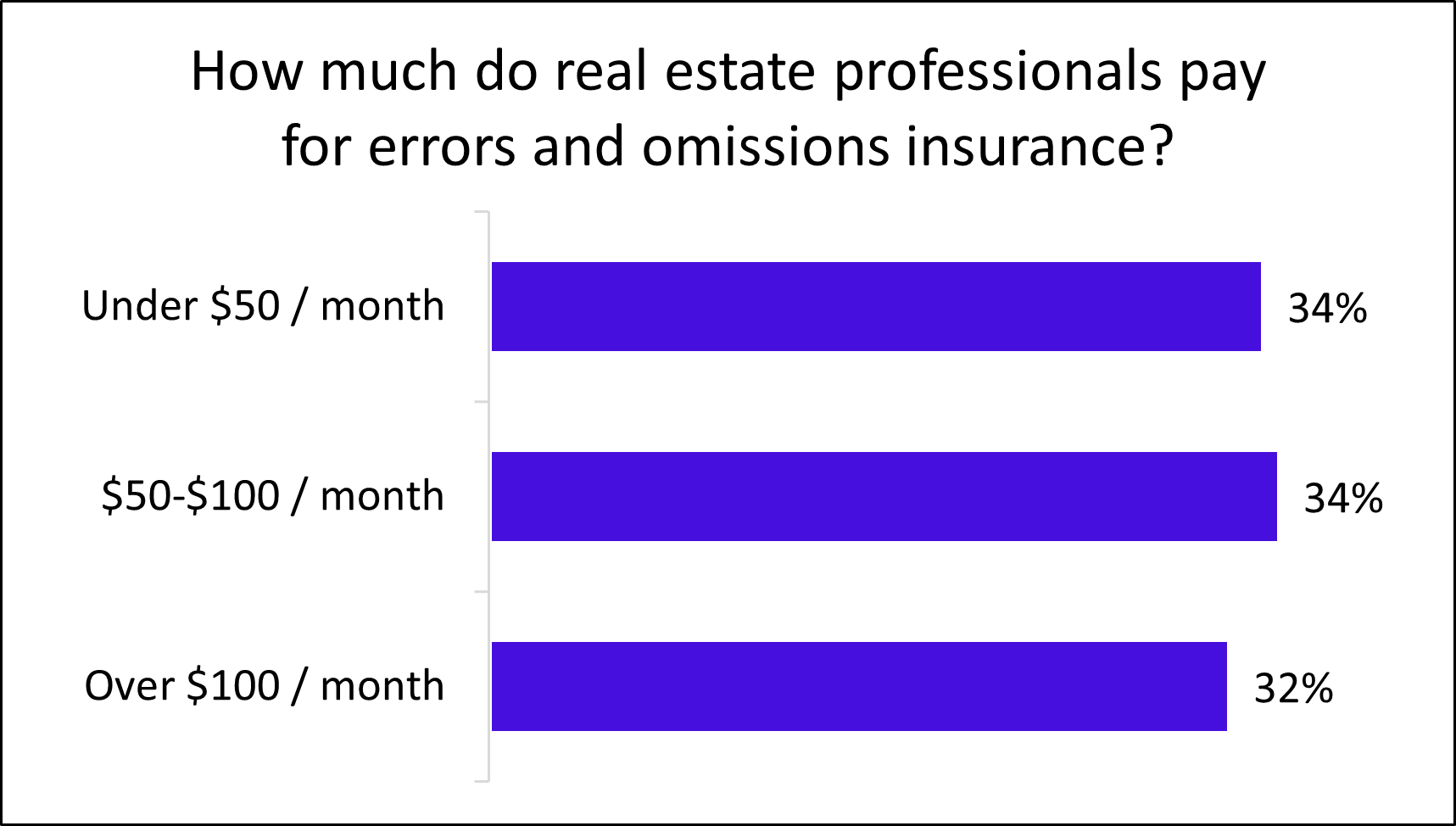
With TechInsurance, 34% of professionals pay less than $50 per month for real estate E&O, and 68% pay less than $100 per month.
Real estate risks impact E&O costs
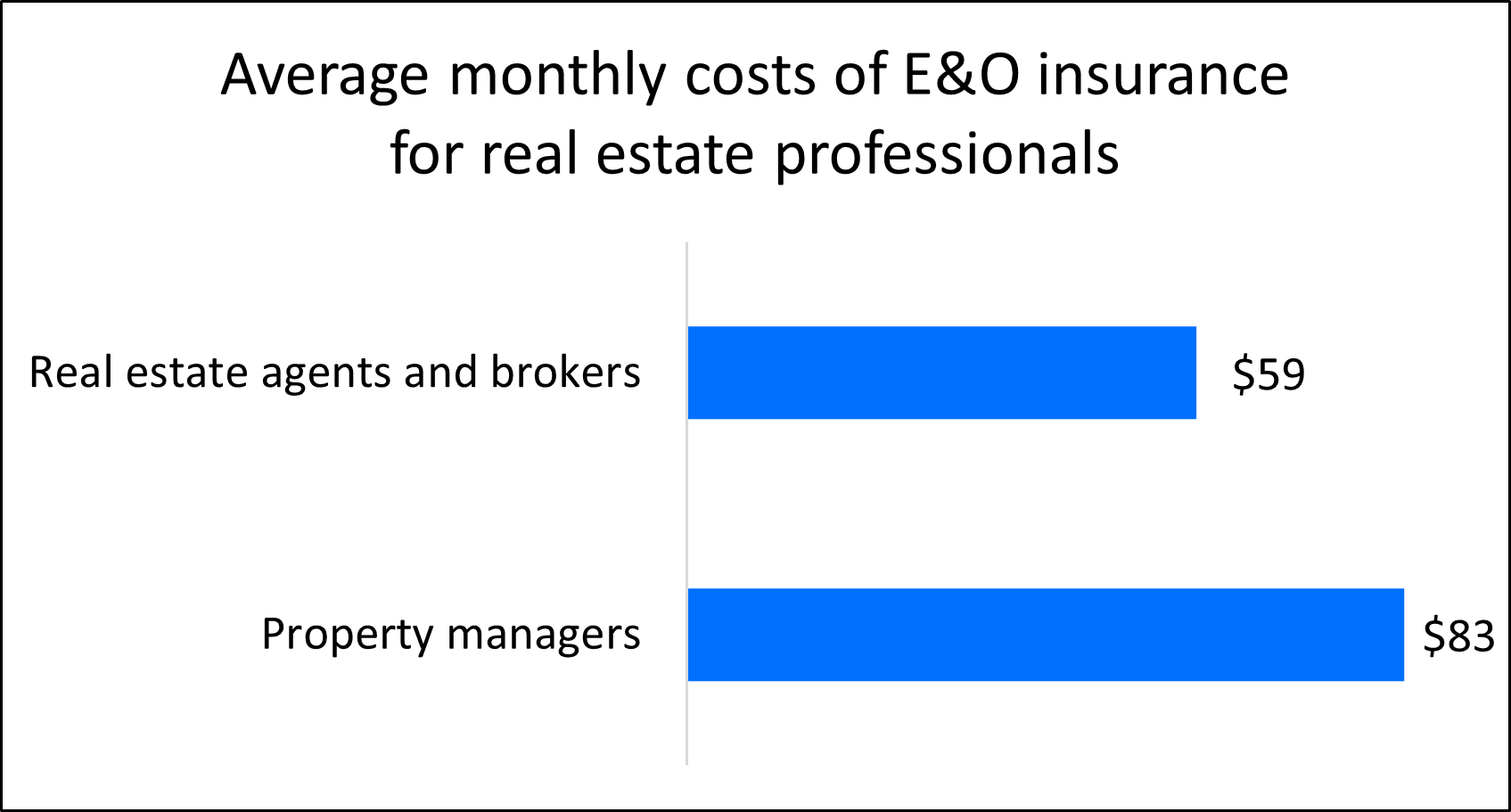
Certain real estate professions carry more risk of costly mistakes than others. Property managers, for example, pay an average of $83 per month, largely due to greater relative risk compared to real estate agents and brokers, who pay $59 per month on average.
Here are E&O insurance costs across different real estate professions:
A variety of factors influence the cost of E&O coverage, including your claims history, your annual revenue, and the number of workers you employ.
Reducing your risks also helps you avoid liability claims, which keeps your insurance costs low. You can practice risk management by maintaining clear communication with clients and maintaining proper documentation throughout the process.

General liability insurance costs for real estate businesses
Real estate businesses spend an average of $40 per month, or $481 per year, for general liability insurance.
Realtors and other real estate professionals may need this coverage to sign a commercial lease, obtain a license, or work with certain clients.
General liability insurance covers legal costs when a third party, such as a client, files a lawsuit over property damage or bodily injury. It also pays for advertising injuries, such as libel, slander, and copyright infringement.
For example, if a client trips over a rug at your real estate firm and suffers a concussion, they could file a lawsuit. A general liability policy would then help pay for your attorney's fees and other legal costs.
This is the average general liability coverage for real estate businesses that buy from TechInsurance:
Premium: $40 per month
Policy limits: $1 million per occurrence; $2 million aggregate
Commercial landlords often carry lessor's risk only (LRO) insurance, which protects landlords against tenant lawsuits arising from property damage or injuries on the leased property. Landlords also frequently carry building insurance, which protects the building, structure, and additions that are being rented out or leased to tenants.
Real estate industry risks can influence general liability insurance costs
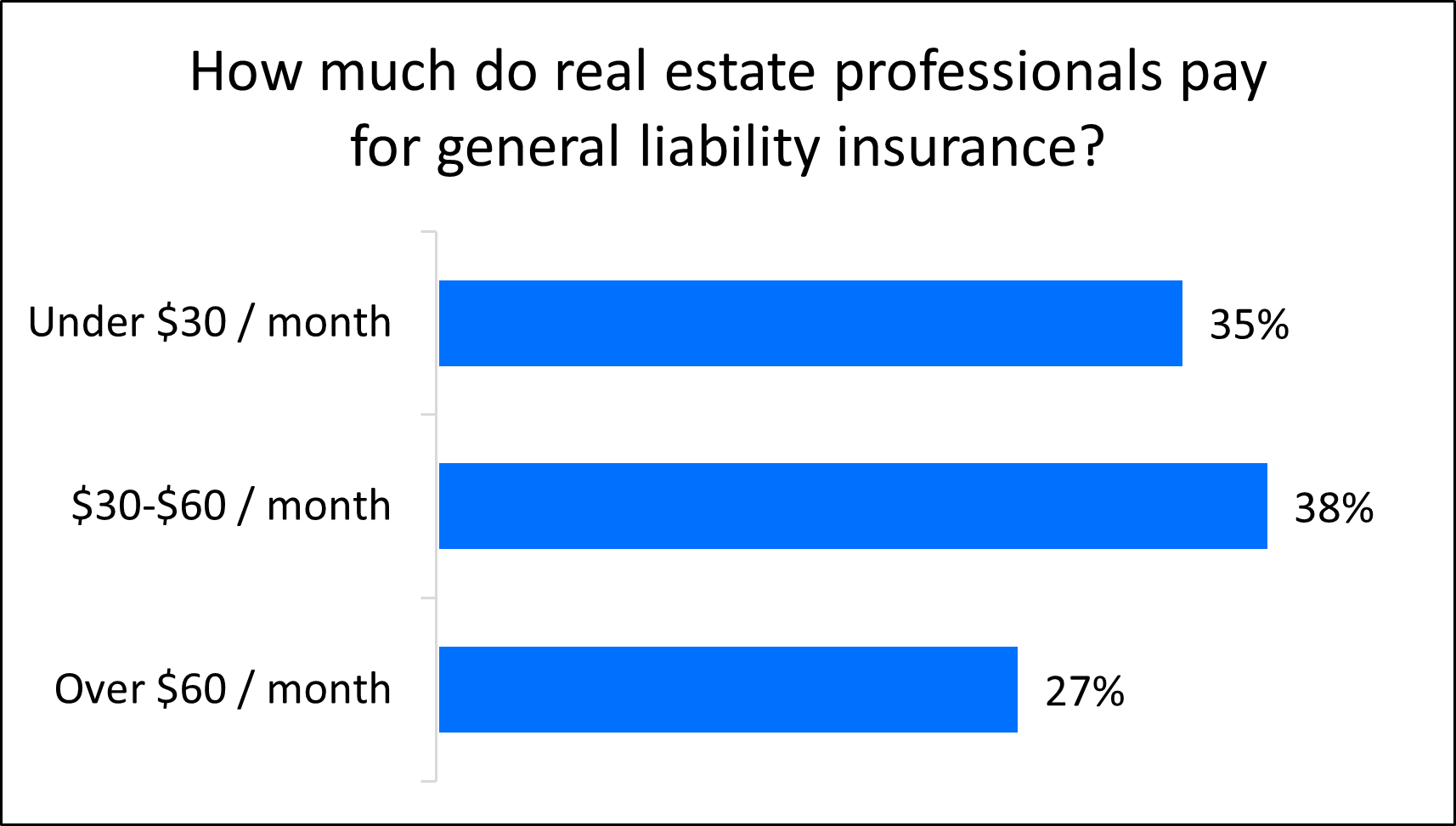
General liability insurance costs depend on your specific risks of third-party lawsuits. 35% of real estate professionals pay less than $30 per month, and another 38% pay between $30 per month and $60 per month with TechInsurance.
The type of real estate work you do can impact your insurance rates
The more interaction you have with the general public, the higher your general liability insurance is likely to be due to the increased risk of third-party incidents and accidents.
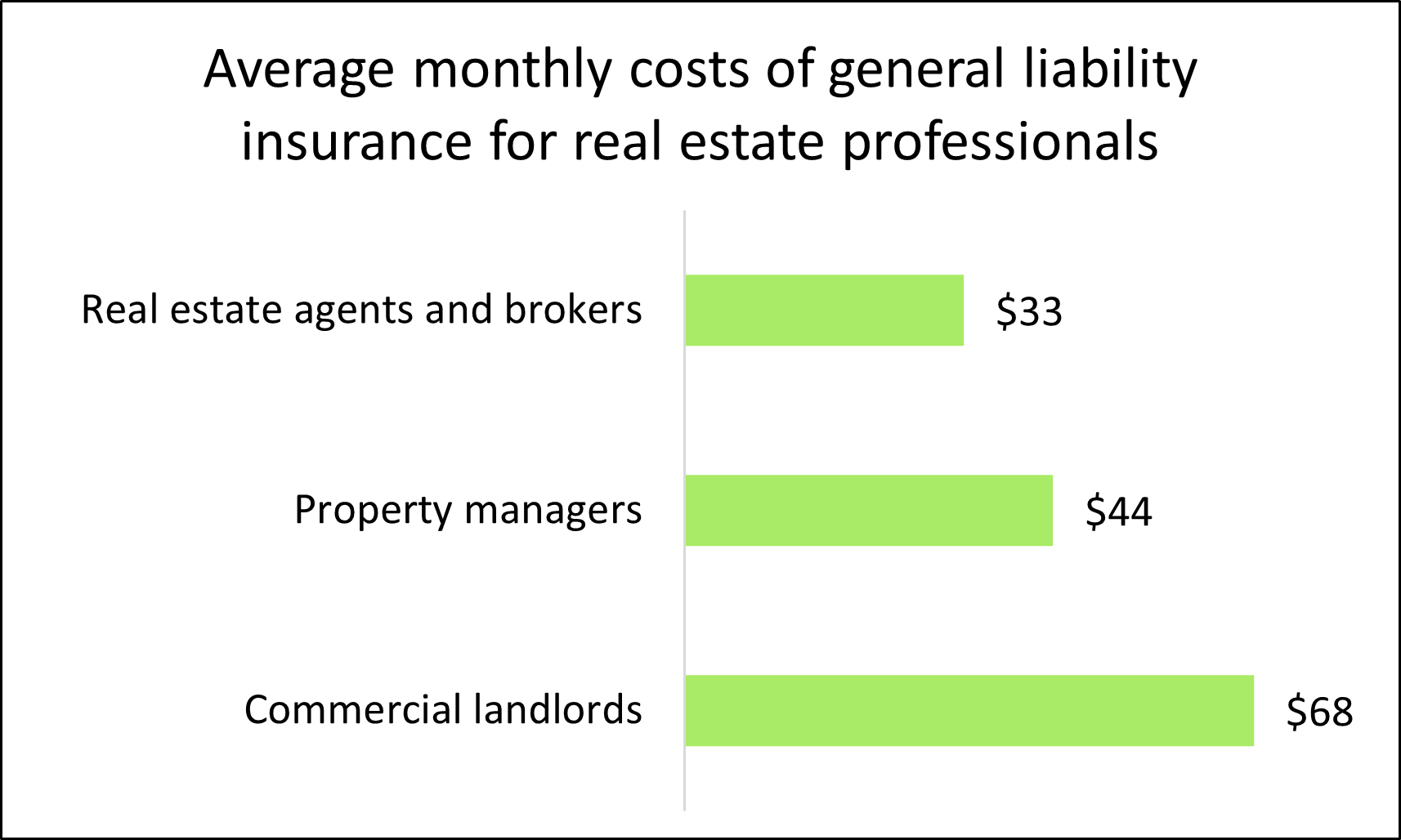
Commercial landlords, for example, pay an average of $68 per month with TechInsurance compared to real estate agents and brokers, who pay an average of $33 per month.
The cost of general liability insurance depends on several factors, including the policy limits you choose. When underwriting your premium, insurance providers will also consider your profession, the size of your business, and any subcontractors or additional insured endorsements you may have.

Workers’ compensation insurance costs for real estate businesses
On average, real estate business owners pay $50 per month for workers' compensation insurance, or $603 annually.
State laws determine when you need workers' comp. In most states, you need it as soon as you hire your first employee. Texas and South Dakota do not require workers' comp in most instances, but it's still recommended.
Workers' compensation pays for medical expenses and provides disability benefits if you or an employee suffers an injury on the job or develops an occupational disease.
For example, if a property manager falls down the stairs while helping a tenant and breaks their leg. Workers' comp would cover their ambulance ride, medical appointments, and prescriptions. It also supplies part of the income they miss out on while they're recovering and unable to work.
Most workers' compensation policies include employer's liability insurance. This type of insurance helps pay for legal defense costs related to workplace injuries.
Though sole proprietors and independent contractors aren't often required to carry workers' comp, it's still a good idea to buy this coverage. If you're injured on the job, your health insurance plan will likely deny the claim, leaving you with hefty out-of-pocket medical bills.
Workers' comp rates depend on the size of your workforce and their risks
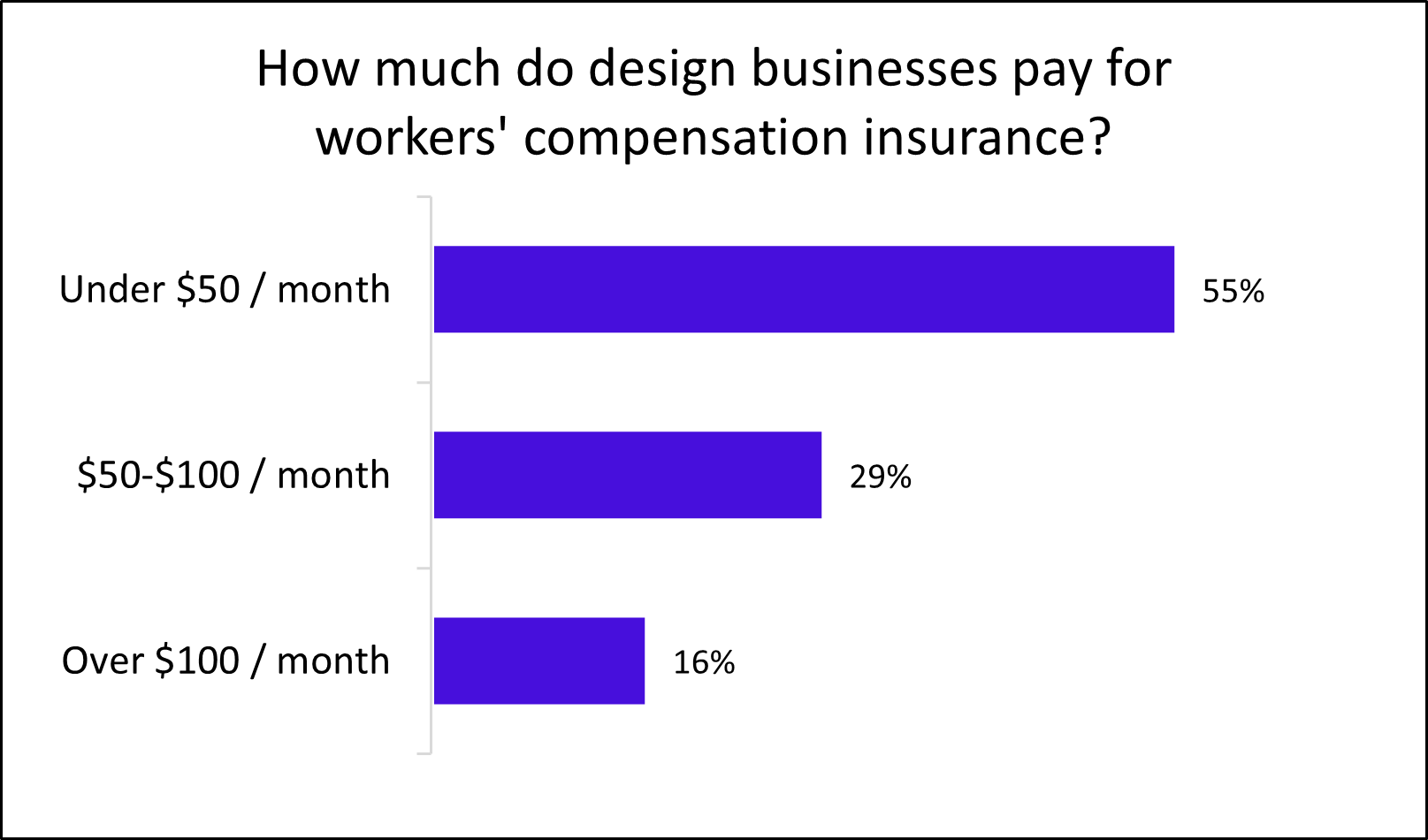
Workers' compensation rates typically depend on the number of employees and their occupational risks. 55% of real estate businesses pay less than $50 per month for workers' comp, while another 29% pay between $50 per month and $100 per month with TechInsurance.

Commercial property insurance for real estate businesses
Real estate businesses and brokerages pay an average of $392 per month, or $4,708 per year, for commercial property insurance.
Property insurance helps pay for stolen, lost, or damaged business property, such as laptops and office furnishings, from fires, theft, windstorms, and other covered events.
TechInsurance's licensed agents often recommend a business owner’s policy (BOP) over a standalone commercial property policy. A BOP combines general liability insurance with commercial property insurance to cover your business against both third-party lawsuits and damage to your own business property. It usually costs less than purchasing each policy separately.
Small, low-risk real estate businesses are typically eligible for a BOP. Higher-risk, larger companies can often save money with a commercial package policy (CPP), which offers liability and property coverage, along with additional options and higher policy limits.
If you rent your business property, a standard commercial property policy or BOP wouldn't provide the protection you need. You would need a business renter's insurance policy, which protects commercial renters in the event of a fire or storm, or even against lawsuits.
Commercial property insurance costs mostly depend on the value of your business property and equipment.

Commercial auto insurance for real estate businesses
On average, real estate professionals spend $160 per month, or $1,924 per year, for commercial auto insurance.
Most states require this coverage for vehicles owned by a real estate service business. If you're in an accident, it can help cover medical expenses, property repairs, and legal costs. It also covers vehicle theft and vandalism.
Keep in mind that sole proprietors and independent contractors who drive their own vehicles for work will also need extra coverage. Your personal auto policy won't cover work-related accidents, so you'll want to consider buying hired and non-owned auto insurance (HNOA).
HNOA provides liability coverage for personal, leased, and rented vehicles driven for work purposes.
Insurance companies consider many factors when determining the cost of a commercial auto policy. That includes your employees' driving records, the number of vehicles you own and their value, and the type of business you have.

Cyber insurance costs for real estate businesses
Small businesses spend an average of $134 per month, or $1,609 annually, for cyber insurance. Also known as cyber liability insurance or cybersecurity insurance, this policy helps cover the costs of complying with your state's data breach laws.
A cyber insurance policy can cover expenses related to a data breach or cyberattack, including legal fees and customer notification costs. It is especially crucial for businesses that store customer information, such as credit card numbers or Social Security numbers.
The cost of cyber insurance primarily depends on the amount of sensitive information your professional service business handles.


Commercial umbrella insurance for real estate businesses
Real estate businesses pay an average of $95 per month, or $1,140 annually, for commercial umbrella insurance.
Commercial umbrella insurance boosts the coverage of your underlying policies, including:
- General liability insurance
- Commercial auto insurance
- Employer's liability insurance
For example, if a third-party injury in your real estate office space results in an injury with costs that exceed the limits on your general liability insurance, then umbrella insurance would kick in to provide coverage, up to the limit of the umbrella policy.
Umbrella insurance is available in $1 million increments. The cost of an umbrella policy depends on how much coverage you buy, along with other factors.

Surety bond costs for real estate businesses
Real estate businesses spend an average of $21 per month, or $250 per year, on surety bonds.
Surety bonds provide reimbursement payments for your client if you're unable to fulfill the terms of a contract or agreement.
Some clients or tenants, particularly commercial tenants, may require a surety bond before they agree to sign a contract or work with you.
The cost of a surety bond depends mostly on the size of the bond you choose to purchase.
Top factors impacting real estate insurance costs
Real estate business coverage costs can vary significantly for small business owners, depending on several factors.
These factors that may influence your premiums during underwriting include:
- Types of real estate services. Managing real estate services for smaller, single-person homes will cost less than managing large, commercial projects.
- Property value and age. If you own larger, older, more expensive buildings, you'll pay more for insurance than smaller, newer, more modest properties. You may also want to insure at the actual cash value (ACV) rather than the replacement cost value (RCV), as RCV tends to lead to higher premiums.
- Annual income. Policyholders who generate more annual revenue will generally pay more for insurance coverage.
- Number of employees. How many people you employ can increase your insurance costs. More employees mean more opportunities for errors or incidents.
- Location. Property values, weather conditions, healthcare costs, and crime rates vary by location and can affect the price of some policies.
- Policy limits and deductibles. The coverage limits and deductibles you chose can increase or decrease your overall insurance costs.
- Claims history. Landlords with a history of insurance claims will likely pay more for small-business insurance because prior claims signal a higher risk to insurers.
Practicing risk management and keeping your clients, employees, and property safe are among the most effective ways to prevent claims and save on insurance.
Top real estate professionals we insure



How do I get affordable real estate insurance with TechInsurance?
Real estate professionals can find affordable business insurance and bonding in three easy steps with TechInsurance:
- Fill out a free online insurance application with details about your business.
- Compare custom business insurance quotes from top-rated U.S. companies in real-time.
- Choose the best types of coverage for your business and pay the premiums to begin coverage.
TechInsurance's licensed insurance agents are available to help answer questions about state insurance requirements and the best real estate business insurance policies for your needs.
Once you've bought a policy, you can download a certificate of insurance for peace of mind and proof of insurance. Small business owners usually get insured within 24 hours of applying for quotes.


