




How much does errors and omissions insurance cost?
The average premium for errors and omissions insurance (E&O, also called professional liability insurance) is about $88 per month. Your exact cost will depend on several factors, including your industry, location, business size, and policy limits.
What do small businesses pay for errors and omissions insurance?
On average, errors and omissions insurance costs $88 per month. Annual premiums range from under $400 to over $7,000.
Our figures are sourced from the median cost of policies purchased by TechInsurance customers from leading business insurance companies. The median provides a better estimate of what your business is likely to pay because it excludes outlier high and low premiums.
How much your premiums cost depends largely on your risk of professional negligence claims. Additional factors include your business revenue, location, and number of employees.
Common errors and omissions insurance premiums for TechInsurance customers
TechInsurance customers pay an average of $88 per month for errors and omissions coverage.
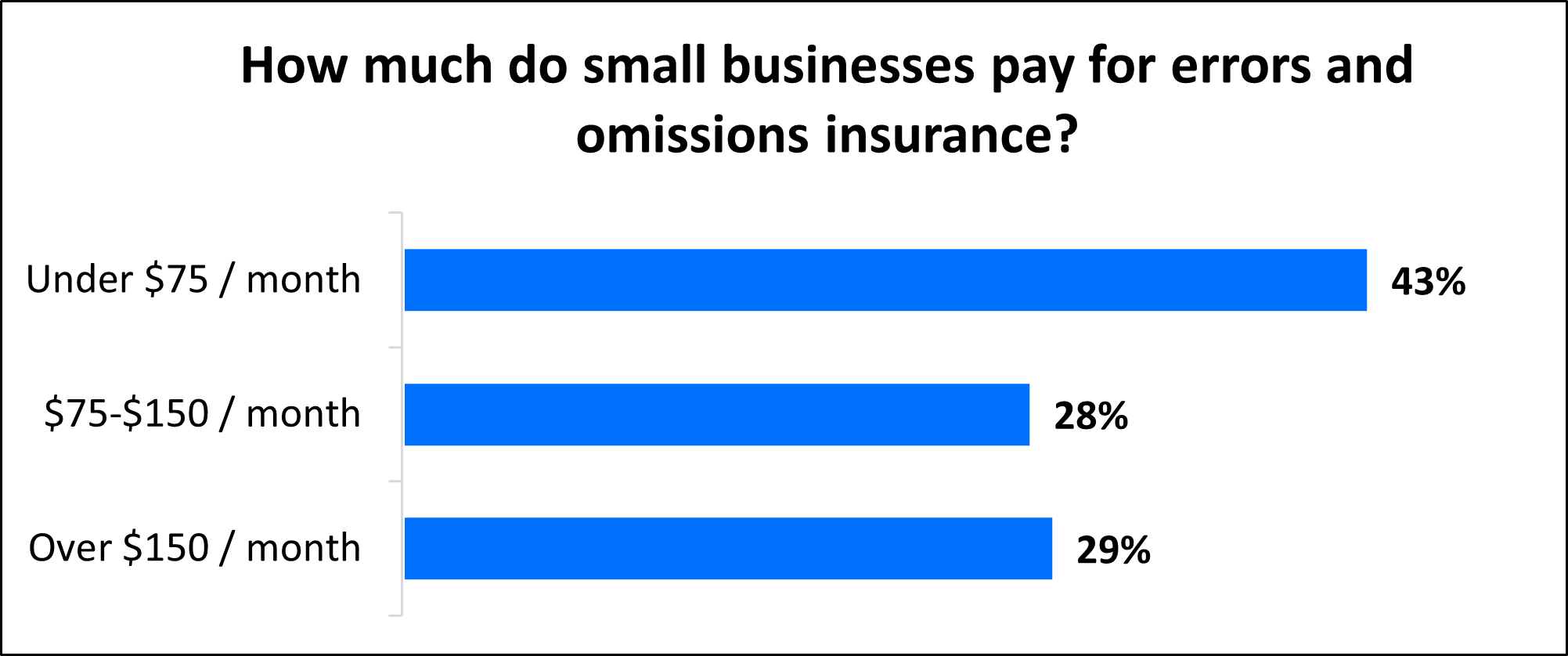
Annual E&O coverage costs for small business owners range from $400 to over $7,000. 43% of TechInsurance customers pay less than $75 per month for their E&O coverage, while another 28% pay between $75 and $150 monthly.
Your unique risks and the type and amount of coverage you choose can impact your policy rates.

Key factors that affect E&O insurance costs
Here are the top factors that impact your errors and omissions insurance costs:
Policy limits
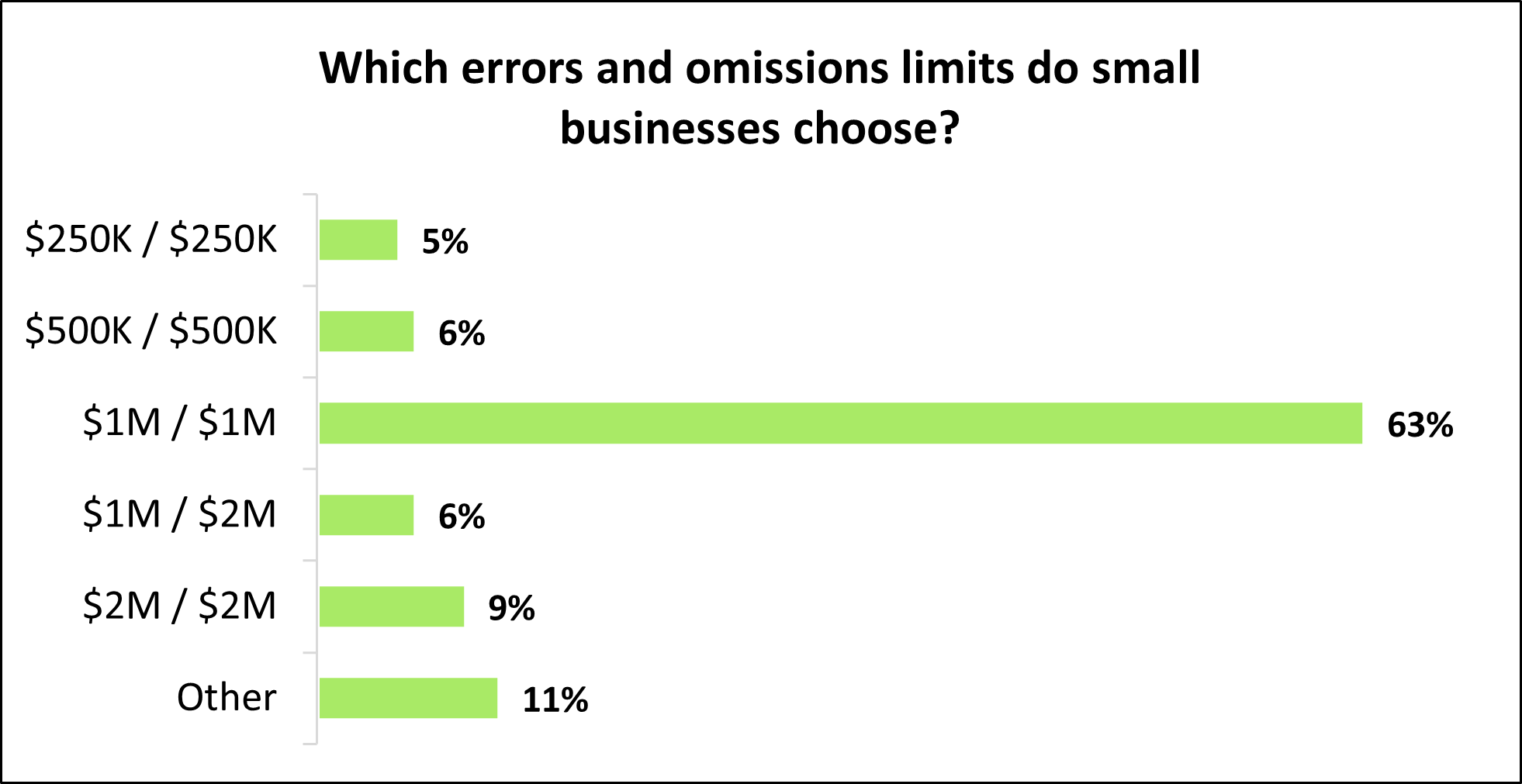
The cost you pay for errors and omissions insurance (also known as professional liability insurance or malpractice insurance) depends on your coverage limits. Most small business owners (56%) opt for an E&O policy with a $1 million per-occurrence limit and a $1 million aggregate limit.
11% of TechInsurance customers select the next most popular choice: a policy with $2 million/$2 million limits.
For some professionals, such as real estate agents, your state laws will determine the amount of coverage you need.
Businesses that offer professional services or advice that affects a client's income should consider higher policy limits as they’re more susceptible to client lawsuits. Higher limits cost more, but they cover more expensive claims.
E&O liability coverage helps protect against client lawsuits arising from the quality of work, such as missed deadlines, errors, or accusations of negligence. This includes legal costs, such as attorney fees.
If you need E&O coverage beyond the standard policy limits, you can carry excess liability insurance to increase these limits. Excess liability coverage starts once you’ve exhausted the limits of your primary E&O policy.
This policy provides an additional layer of protection for higher-risk businesses; however, the higher your total coverage limit, the more risk your insurance provider is taking on, which increases your rates.
Consult a TechInsurance agent if you have questions about the right coverage for your needs.
Industry
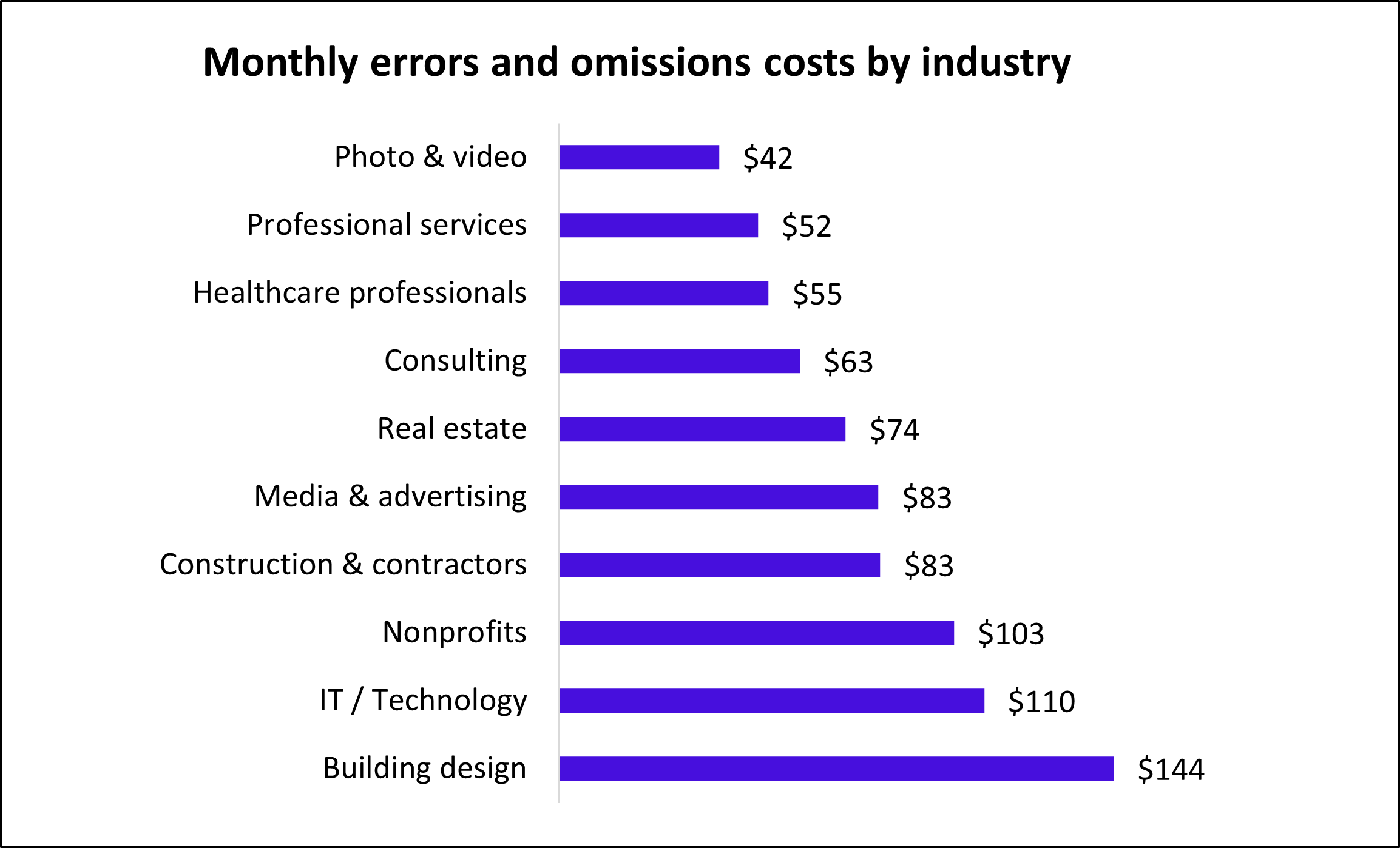
Your specific industry can impact how much you'll pay for your errors and omissions coverage. High-risk professions generally pay significantly more than low-risk ones.
Examples of industries and how much they pay include:
- Building designers pay an average of $144 per month for E&O insurance due to the high liability costs associated with structural issues and design errors.
- IT professionals pay $110 per month on average due to the high costs associated with data breaches and cybersecurity failures.
- Professional service providers, such as notaries public, pay relatively low rates for E&O coverage, typically around $52 per month, depending on the type of services they provide.
- Business consultants pay an average of $63 per month, though rates can vary based on location.
Other professionals, including healthcare professionals and lawyers, may be required to carry E&O coverage to obtain licensure or to sign a client contract.
Even if it's not legally required, E&O coverage is highly recommended since it can help protect your business from costly legal fees arising from professional blunders, missed deadlines, or perceived negligence.
The following chart outlines how E&O insurance costs can vary based on your profession:








Cyber risks
E&O insurance by itself won't protect you if a client sues over a cyberattack that results in a data breach. However, it's often bundled with cyber liability insurance in a package called technology errors and omissions insurance, also referred to as tech professional liability insurance.
Tech E&O coverage costs depend on the amount of data and the number of employees who can access it. The more people in your company who have access to sensitive data, the greater the chance of a data breach.
For example, large cybersecurity companies and businesses with sensitive digital assets would pay more for their tech E&O policy than a smaller technology company with fewer employees.
Deductible
Location
Your E&O coverage costs can be impacted by your business location. Insurance providers factor in location when determining your risks and establishing premium rates. Some areas may have state-specific policy requirements or greater legal costs.
California and New York businesses, for example, may face higher premiums than those in other regions due to the business environment, including legal and historical claim trends.
If your business has locations in several states or serves clients in multiple jurisdictions, your policy price and structure may also be impacted.
The following table shows how the cost of E&O insurance varies across states:
State | Errors and omissions insurance cost |
|---|---|
$94 per month | |
$84 per month | |
$83 per month | |
$83 per month | |
$78 per month | |
$93 per month | |
$97 per month | |
$79 per month | |
$91 per month | |
$99 per month |
Claims history
Insurance companies evaluate your claims history to establish how risky your business is to insure. Companies with a history of errors and omissions claims will pay more than those without.
Risk management is critical to keeping your insurance costs down. Small businesses without a history of claims often benefit from lower rates and other discounts.
Minimize risks at your workplace through strict protocols, employee training, safe business practices, and documented communications with clients. These risk management strategies can help keep your overall insurance costs lower.
Number of employees
The more employees you have, the more opportunities there are for a client to file a lawsuit. Larger workforces can increase the likelihood of miscommunications, mistakes, and incidents that lead to E&O claims.
While errors and omissions insurance is recommended for many small businesses, most state laws require small business owners to carry workers' compensation if they have employees, and commercial auto insurance if they have business-owned vehicles.
If you are a freelancer, independent contractor, or sole proprietor, it's still a good idea to carry E&O coverage to protect yourself from the high costs of legal defense.
Annual revenue
Higher annual business income often leads to higher errors and omissions liability premiums for most small businesses.
The bigger the size of your business and the more contracts and clients you take on, the more likely you or your employees are to make an error or commit an accident, which could lead to a lawsuit and a subsequent insurance claim.
Smaller companies with lower revenue often have lower E&O insurance costs.
Growing your business and taking on more jobs, contracts, and employees can increase professional liability insurance rates.
Does my business need errors and omissions insurance coverage?
Errors and omissions insurance is a crucial coverage option for businesses that provide expert advice or specialized services.
Seasoned professionals can still make errors, oversights, or gaffes and may provide guidance that causes financial loss for their clients. If the client sues, legal expenses and settlements can escalate to the point where they could sink your business.
Even if you or your employees have done nothing wrong, you could still face a costly lawsuit. For example, your business could fall behind on a projected deadline due to no fault of your own or your team, or a client could sue over scope creep that was out of your hands.
Lawsuits are exceptionally expensive, even frivolous ones. If you lose the lawsuit, you could end up paying a significant amount in a court-ordered judgment or a settlement.
Errors and omissions insurance covers legal expenses related to lawsuits, and because the premium is based upon your level of risk and your industry, many small businesses pay a fairly low amount for this type of insurance.
How can you save money on E&O insurance?
It’s easy to save money on your errors and omissions insurance policy without compromising coverage.
Some strategies to keep costs down include:
- Bundle policies. Small businesses may be eligible to bundle cyber liability insurance with E&O insurance in a technology errors and omissions policy. Generally, this policy costs less than purchasing the coverages separately. Some businesses can also bundle E&O with general liability insurance for a discount.
- Pay the annual premium. When you buy a policy, you can elect to pay your premium monthly or annually. The annual amount is generally lower than paying monthly.
- Maintain continuous coverage. Because errors and omissions insurance is a claims-made policy, you can also pay more to extend coverage to a date in the past. However, it’s typically cheaper to maintain continuous coverage than to stop and restart a policy.
- Pick a higher deductible. Selecting a higher deductible is an easy way to save on your premium, but make sure it's one you can easily afford. If you can’t pay it, you can’t collect on a claim.
- Manage your business risks. Claims on your insurance policy make your premium go up. You should reduce your business risks to avoid claims and keep your premium low.
How can you avoid making claims on your errors and omissions policy?
A good risk management strategy to reduce E&O claims includes:
- Detailed contracts with clients
- Clear client communication
- Prompt resolution of complaints
- Checking (and double-checking!) your work for errors
- Strong cybersecurity measures to reduce cyber risks
You can’t eliminate risk. If that were possible, insurance companies would be out of business. But risk management helps you sidestep common pitfalls that lead to liability claims and higher errors and omissions (or professional liability) insurance costs.

Before purchasing errors and omissions insurance (E&O), consider factors such as premium pricing, insurance company ratings, and policy limits.

How do you buy insurance with TechInsurance?
TechInsurance is a trusted insurance expert for small businesses, including contractors and consultants. We help business owners compare quotes from top-rated providers, buy policies, and manage coverage online.
By completing TechInsurance's easy online application today, you can compare free quotes for errors and omissions insurance and other policies from top-rated U.S. carriers. TechInsurance insurance agents are available to help answer any questions you may have.
Once you find the right policies for your small business, you can begin coverage in less than 24 hours and get a certificate of insurance for your small business.
Verified errors and omissions insurance reviews
Hear from customers like you who purchased E&O coverage.
Learn more about other business insurance costs
Insurance premiums vary based on the policies a business buys. View our small business insurance cost overview or find out the average costs for other common types of business insurance.