


How much does commercial trucking insurance cost?
Key insurance policies and their expected costs for trucking businesses
Here are the top insurance policies bought by trucking businesses and their average monthly costs:
- Commercial auto insurance: $816 per month
- General liability insurance: $51 per month
- Workers' compensation insurance: $650 per month
- Motor truck cargo insurance: $129 per month
- Surety bond: $60 per month
- Cyber insurance: $134 per month
Our figures are based on the median policy cost for businesses that request truck insurance quotes through TechInsurance. The median provides a better estimate of your expected business insurance policy costs because it excludes outlier high and low insurance premiums.

Commercial auto insurance costs for trucking businesses
Trucking professionals spend an average of $816 per month, or $9,794 per year, on a commercial auto insurance policy.
Most state regulations require commercial vehicles, such as tow trucks, semi-trucks, box trucks, and other company vehicles, to carry auto insurance.
If you're in an accident, it can help cover medical expenses, physical damage repairs, and legal fees. It also covers vehicle theft and vandalism if your business truck is stolen or damaged.
Keep in mind that small business owners, including sole proprietors and independent contractors, who drive their personal vehicles for business purposes will need additional coverage. Your personal auto insurance policy won't cover work-related accidents, so you'll need to purchase hired and non-owned auto insurance (HNOA).
HNOA provides liability coverage for personal, leased, and rented vehicles driven for work purposes.
The Federal Motor Carrier Safety Administration (FMCSA) often requires trucking companies to carry specific policies and coverage limits based on the type of truck and type of work. For example, trucks that carry hazmat materials will often need to carry higher coverage limits than other, less risky cargo types.
To cover trucks without a trailer between loads, you'll need to purchase bobtail insurance, as some standard commercial truck insurance policies will not provide coverage if your truck does not have a trailer.
If you use your truck for personal or non-authorized uses, you'll need to carry a separate non-trucking liability (NTL) policy or endorsement. Some truckers also choose to add physical damage insurance to their auto policy, which covers everything from collisions to falling branches.
The types of trucks you use and their value determine commercial auto costs
The types of company-owned trucks and vehicles you have, their value, and how often you use them all impact your commercial auto insurance costs.
Truckers with high-value, frequently used vehicles can expect to pay more for coverage than those with low-value vehicles that are rarely used.
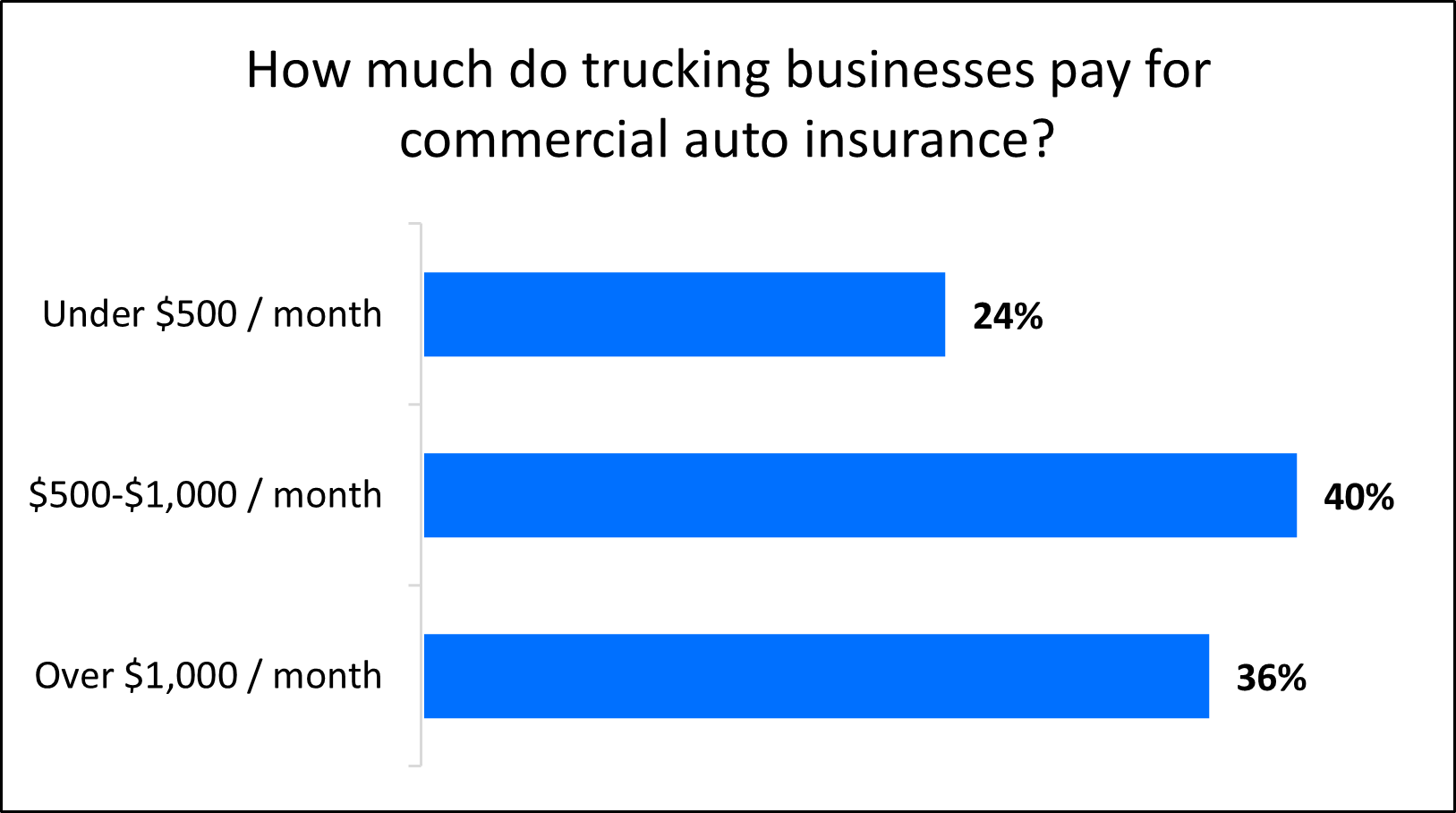
Among TechInsurance customers, 24% of trucking companies and contractors pay less than $500 per month for commercial auto insurance. And another 40% pay between $500 and $1,000 per month for coverage.
Other factors that determine costs include employees' driving records, policy limits and deductibles, and the coverage options you choose, such as comprehensive coverage or collision coverage.

General liability insurance costs for trucking businesses
Trucking businesses spend an average of $51 per month, or $606 per year, for general liability insurance.
In some cases, you may need this coverage in order to sign a commercial lease, get licensed, or work with certain clients.
A general liability policy covers legal costs when a third party (someone outside of your company) files a lawsuit over a bodily injury or property damage. It also helps pay for advertising injuries, such as libel, slander, and copyright infringement.
For example, a customer could trip in the storefront of your moving company and break their arm. If they file a lawsuit, a general liability policy would help cover your legal costs, such as attorneys' fees.
This is the average general liability insurance policy for trucking businesses that buy from TechInsurance:
Premium: $51 per month
Policy limits: $1 million per-occurrence; $2 million aggregate
Deductible: $750
Many trucking companies save money by bundling their general liability and commercial property insurance into a business owner's policy (BOP).
A BOP is an effective way to save money while protecting your business from a wide range of the most common small business third-party incidents, property damage and theft, and lawsuits.
General liability insurance can be affordable for most trucking businesses
Fortunately, trucking companies don't have to pay a lot for insurance.
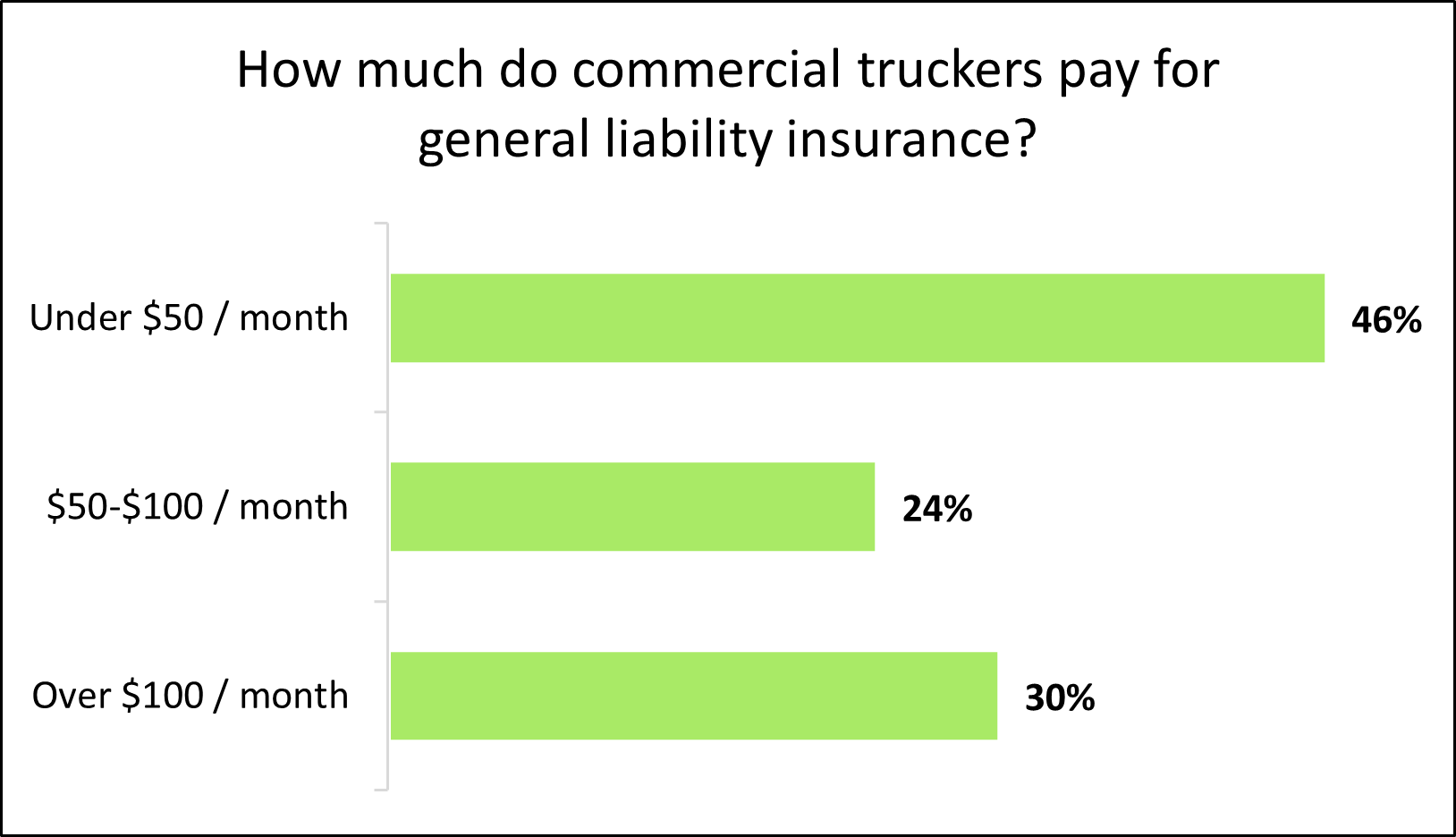
Among trucking businesses that buy with TechInsurance, 46% pay less than $50 per month for general liability coverage. Another 24% pay between $50 and $100 per month.
Factors such as your business income, policy limits, and location affect your insurance costs. By choosing lower coverage limits or a higher deductible, you can reduce your premium to an amount that fits your budget.
Most trucking businesses (96%) choose $1 million per-occurrence and $2 million aggregate limits for general liability insurance.
The cost of general liability insurance will also depend on your type of trucking business, the size of your business, and any additional insured endorsements you may have.

Workers’ compensation insurance costs for trucking businesses
On average, trucking business owners pay $650 per month for workers' compensation insurance, or an annual premium of $7,795.
State laws determine when you need workers' comp. In most states, you need it as soon as you hire your first employee. But even in areas where it isn't required, it's still recommended.
Workers' compensation insurance covers medical expenses and provides disability benefits if you or an employee suffers an injury on the job or develops an occupational illness.
For instance, if an employee at your towing company suffers a back injury while getting out of a truck, this policy would pay for their doctor appointments, physical therapy, and any other medical costs. It also supplies part of the income they miss out on while they're recovering and unable to work.
Most workers' compensation policies include employer's liability insurance. This type of insurance helps cover legal defense costs if an employee sues over workplace injuries.
While sole proprietors and independent contractors aren't usually required to carry workers' comp, it's still a good idea to maintain this coverage.
Your health insurance plan is unlikely to cover a work-related injury claim, leaving you with hefty out-of-pocket medical payments and significant financial loss.
Save money on workers' comp by comparing quotes from different insurance providers and maintaining a safe workplace.
The cost of workers' comp depends on workplace risks
The cost of workers' compensation insurance depends on several factors, including the number of employees you have and the level of risk associated with their jobs.
Trucking businesses often pay higher rates for their truckers than for safer, more office-based types of work. Employees are assigned different classification codes used to determine premiums.
Because of the nature of their work, truckers are typically exposed to more accidents, incidents, and injuries than other types of workers. For example, a trucker could suffer an injury while loading and unloading cargo, get injured in a traffic accident, or sustain chronic health problems from long hours of sitting while driving.
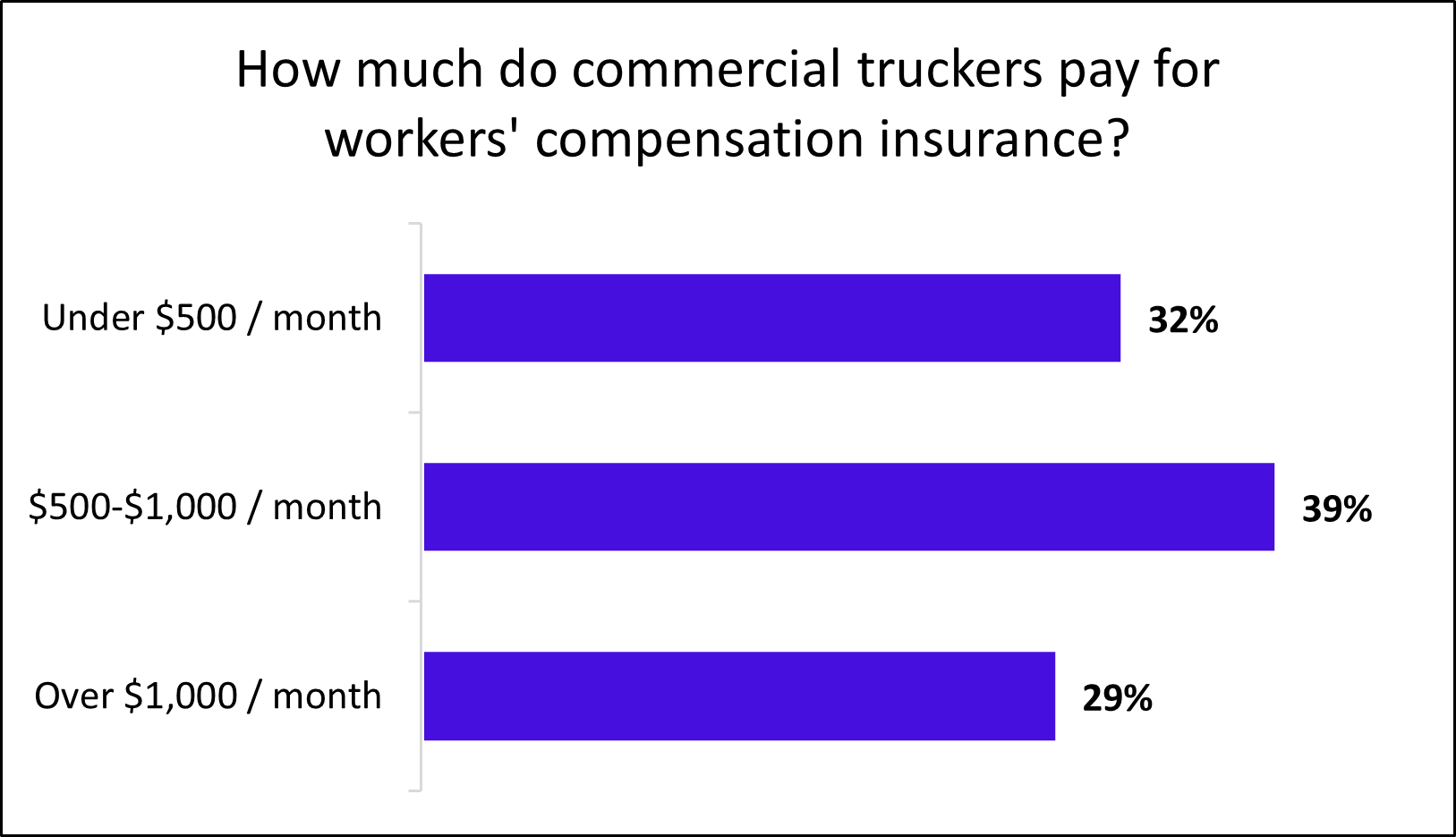
32% of trucking business owners pay less than $500 per month for workers' compensation insurance, and 71% pay $1,000 or less per month for coverage.
Your industry, the safety programs you have in place, state regulations, and your claims history are also important factors in determining workers' comp costs.

Motor truck cargo insurance for trucking businesses
Truckers pay an average of $129 monthly, or $1,553 annually, for motor truck cargo (MTC) insurance.
MTC insurance protects your business against financial losses if your truck cargo is stolen, destroyed, or damaged while in transit. This is a type of inland marine insurance that covers property stored off-site or transported over land.
The cost of your motor truck cargo insurance is largely determined by the value of your cargo and the type of goods that you transport.
For instance, a delivery driver who transports inexpensive household goods will likely cost less to insure than a driver who delivers expensive and hazardous cargo.
MTC only covers your property and cargo in transit. If you maintain a storefront, a dispatch location, or a storage facility, you will need to carry commercial property insurance in order to protect your stationary business property. This type of policy protects both the structure and everything inside it against events like fires, severe weather, or plumbing failures.
Property insurance premiums are determined by factors such as the total value of your business assets, the age and condition of the building, and the specific coverage you select.
Another major factor is how your belongings are valued: actual cash value coverage pays out based on the item's depreciated value at the time of the loss, while replacement cost coverage pays what it would cost to replace the item with a new equivalent today.


Surety bond costs for trucking businesses
The average cost of a surety bond for trucking businesses is $60 per month, or about $719 annually.
A surety bond guarantees that your trucking business will fulfill the terms of a contract. That might include completing a trucking project by its deadline, complying with regulations, or paying employees and other parties fairly.
If your business fails to meet the terms of the contract, the surety company will compensate your client for their financial loss. Unlike a business insurance policy, this money must be paid back to the company that issued the bond.
Surety bonds are often required for trucking contracts, and may be a legal requirement under certain conditions.
For example, freight brokers and forwarders must maintain a $75,000 bond or risk losing their operating authority, according to the Federal Motor Carrier Safety Administration (FMCSA).
As with a fidelity bond, the cost of a surety bond is based on the total bond amount.

Cyber insurance costs for trucking businesses
Small businesses spend an average of $134 per month, or $1,609 annually, for cyber insurance.
Also known as cyber liability insurance or cybersecurity insurance, this policy helps pay for the costs of complying with your state's data breach laws.
A cyber insurance policy can cover expenses related to a data breach or cyberattack, including legal fees and customer notification costs.
It is especially crucial for trucking companies that store personal customer information, such as credit card numbers or Social Security numbers.
The cost of cyber insurance primarily depends on the amount of sensitive information handled by your trucking business.
Top factors impacting commercial truck insurance costs
Several key factors impact trucking business insurance costs, including:
- Types of trucking services: Trucking businesses that offer high-risk services, such as overweight loads and refrigerated cargo, tend to have higher insurance costs.
- Types of trucks and other business property: The vehicle types and value of your business property and trucks can impact your insurance costs.
- Annual income: Businesses with higher annual revenue will generally pay more for insurance solutions than smaller businesses, which tend to have lower premiums.
- Types of cargo transported: If you transport dangerous or hazardous materials, you will likely have higher insurance rates than trucks that transport less risky cargo.
- Number of employees and their driving records: A larger workforce of truck drivers increases the risk of accidents, injuries, and lawsuits, leading to higher rates. Additionally, employees with clean driving records can help you save money, as this indicates lower risk to insurers and results in lower rates than for employees with a poor driving history.
- Distance you travel: Long-haul trucking owner-operators tend to pay higher premiums than trucking operations that only operate locally.
- Business location: Businesses in areas with higher crime rates, greater foot traffic, or more exposure to severe weather often pay higher insurance rates.
- Policy limits and deductibles: How much insurance you elect to purchase will impact your insurance costs. Higher deductibles and lower limits on your policies can help you save money.
- Claims history: Previous insurance claims may signal policyholder risk to insurers, as businesses with a history of claims are more likely to file future claims.
- U.S. Department of Transportation (DOT) insurance requirements: The DOT in your state may have specific requirements and minimum liability coverage requirements that you need to carry in order to operate in your area.
There are some factors you can’t control when it comes to your commercial truck insurance rates, but you and your employees can still take meaningful steps to engage in risk management and reduce claims, which can help keep your insurance costs down.
Top trucking businesses we insure



How do I get affordable commercial trucking insurance with TechInsurance?
Trucking business owners can find cheap truck insurance in three easy steps with TechInsurance:
- Fill out a free online insurance application with details about your business.
- Compare custom business insurance quotes from top-rated U.S. providers in real time.
- Choose the best policies for your business and pay the premiums to begin coverage.
TechInsurance's licensed insurance agents are available to help answer questions about state insurance requirements, the best types of policies for your trucking business needs, and small business insurance costs based on your budget.
Once you've bought a policy, you can download a certificate of insurance for peace of mind and proof of insurance. Small business owners usually get insured within 24 hours of applying for quotes.


