



How much does business tools and equipment insurance cost?
The average premium for tools and equipment insurance is $48 per month. Your location, coverage limits, the types of property you insure, and their value affect the exact cost of this policy, among other factors.
What do small businesses pay for contractor’s tools and equipment insurance?
Regardless of insurance policy limits, the average cost of tools and equipment insurance for a small business is $48 per month. Annual premiums range from $150 to over $4,500.
These estimates were derived from an analysis of the median cost of thousands of insurance policies purchased by TechInsurance's small business customers from leading business insurance companies.
The median cost offers a more accurate estimate of what your business is likely to pay than the average cost of business insurance because it excludes outlier high and low premiums.
Tools and equipment coverage protects items that are in transit, stored away from your primary business location, or used at job sites. Protected business equipment includes hand tools, power tools, laptops, excavators, ladders, safety gear, and inventory.
This coverage helps with repair and replacement costs if your business property suffers accidental damage or is affected by events such as a fire or certain weather. It also covers tool theft and vandalism.
The cost of your policy depends largely on the value of the items that you wish to insure. This also includes rented equipment.
Tools and equipment insurance is commonly purchased by construction companies, though it's commonly referred to as contractor's tools and equipment insurance for carpenters, electricians, roofers, landscapers, and other tradespeople. It is also sometimes called inland marine insurance.
Factors that impact the cost of business tools and equipment insurance
Several factors, such as your policy limits and coverage options, influence the cost of your contractor's tools and equipment insurance:

Policy limits and deductible
A contractor's tools and equipment insurance policy covers the repair or replacement cost of a wide range of business property.
Examples of these types of equipment include hand tools, power tools, and small saws. This coverage is designed to protect such items while they are in transit, at a job site, or stored off-site.
The cost of your contractor's tools and equipment policy typically depends on the value of your business property. To avoid financial loss, you should choose a coverage limit that matches the value of your items.
For items worth more than $2,500, such as heavy equipment or bulldozers, you may need to list them separately on the policy with their own scheduled limits.
Small business owners who purchase policies with a higher deductible will likely pay less money, but you must pay the deductible before your insurance will activate to cover a claim.
Type of property valuation method
When purchasing your contractor's tools and equipment policy, you'll have the option to cover your property for either its replacement value or actual cash value:
- Replacement value. Replacement cost coverage costs more, but it covers the cost of a brand-new replacement item.
- Actual cash value. Actual cash value coverage is less expensive because it accounts for depreciation and compensates you for the used equipment value.
No matter which method you choose, you'll want to set limits that provide sufficient compensation for any financial losses. Insuring high-value items, items that travel frequently, and items vulnerable to theft typically costs more.
Type of coverage
A contractor's equipment policy that covers open perils is more expensive than a policy that covers named perils.
Open perils coverage protects your business property against all losses, except those specifically excluded in the policy. On the other hand, named perils only cover losses listed in the policy.
Typically, a contractor’s equipment coverage protects your tools and gear against fires, vandalism, theft, and hail damage. Exclusions include equipment breakdown, spoilage, extreme weather events such as earthquakes and floods, general wear and tear, and damage to your vehicle.
To protect your commercial vehicles, you can purchase a commercial auto insurance policy or specific coverage endorsements for other risks.
Security measures
An easy way to lower your contractor's tools and equipment premium is to keep your business property safe.
When underwriting your policy, insurance companies will often consider how secure your property is. For instance, equipment stored in a locked office with a burglar alarm will cost less to insure than expensive construction tools left out in the open at a job site with little to no safety measures.
In addition to security measures, insurance providers will also consider how often your items are in transit.
Industry risks
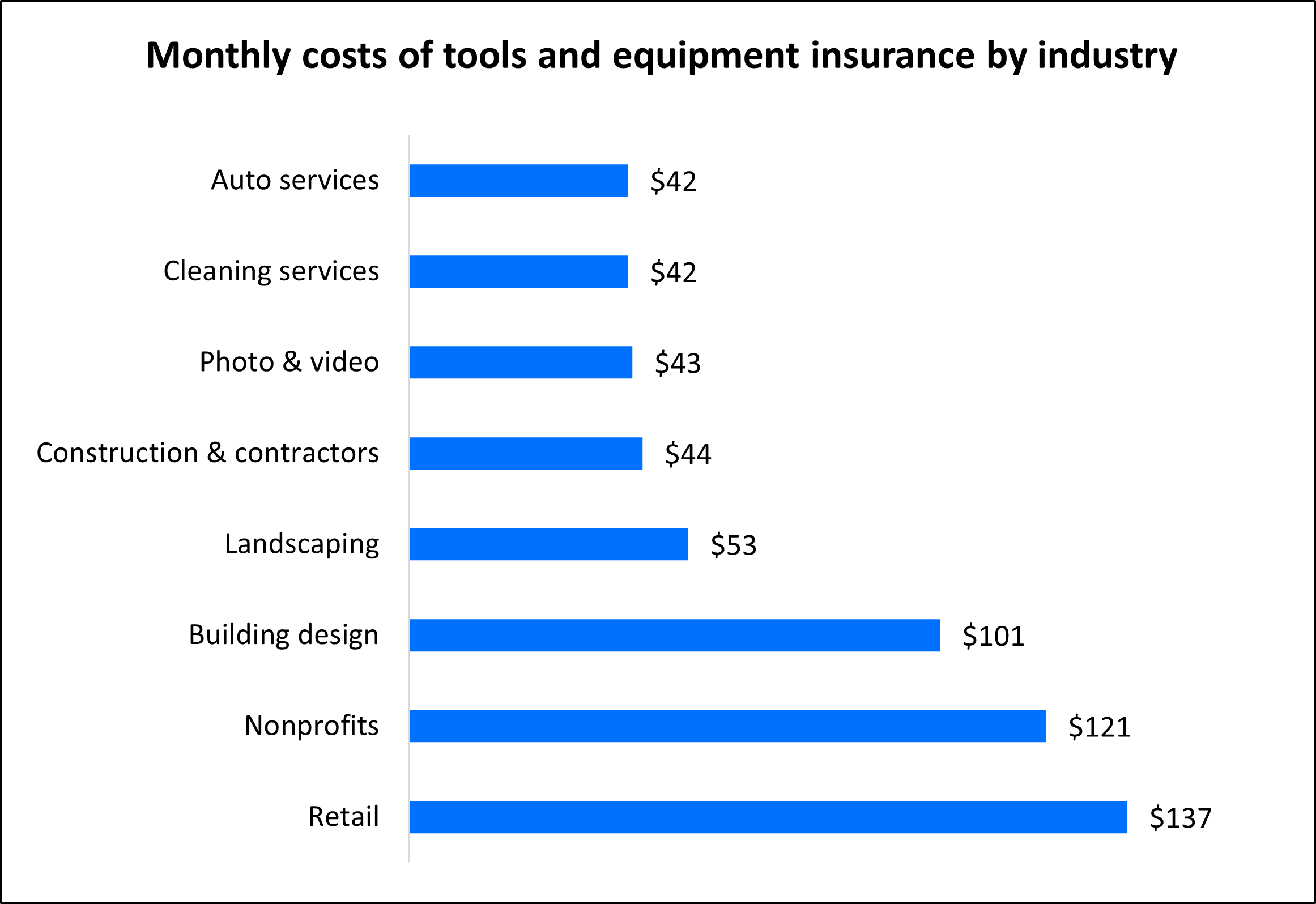
Insurance companies will take your industry into account when determining premiums for your contractor's tools insurance and other equipment policies. In general, small businesses in higher-risk professions with greater chances of filing property claims will likely pay higher premiums.
For instance, retail businesses spend an average of $137 per month on a contractor's tools and equipment policy, as they may face a greater risk of theft or property damage due to increased contact with the public. On the other hand, auto service businesses pay only $42 a month for this coverage.
See the graph below for more insight into how your type of business can impact the cost of your contractor's tools and equipment insurance premium.
Business location
Location-specific factors that can affect property insurance premiums include:
- Crime rates
- Hurricanes and other natural disaster risks
- Population density
- Materials and labor costs
- Emergency services proximity
Insurance companies will determine how safe your items are when establishing your premium rates. For example, businesses located in quiet, rural areas will be cheaper to insure than businesses in heavily populated cities.
Claims history
A claims history can impact your insurance rates. Small businesses with a lengthy history of claims will likely pay more for tools and equipment insurance than companies that have never filed a claim.
To avoid claims and keep your rates low, it helps to store business property securely and invest in security measures like alarm systems and surveillance cameras.
How can you find affordable business tools and equipment insurance?
There are several things you can do to keep your contractor's tools and equipment insurance costs low.
Some strategies include:
Bundle policies
Small low-risk businesses may be eligible for a business owner’s policy (BOP). A BOP bundles general liability coverage with commercial property insurance and costs less than purchasing the policies separately.
Small and mid-size businesses with higher-risk concerns can opt for a commercial package policy (CPP). A CPP also includes general liability coverage and property insurance, but is often more flexible and covers more risks than a standard BOP.
You can also add other types of coverage to your BOP or CPP as an endorsement. Frequently added coverages include business interruption insurance and tools and equipment insurance.
Pay your entire premium upfront
You can choose to pay your insurance premiums once a month or once a year. While making a smaller payment each month requires less money up front, it may cost more in the long run since insurers often offer discounts to businesses that pay an annual premium.
Choose a higher deductible
Choosing a higher deductible is an easy way to save on your premium, but make sure to choose a deductible you can still afford. If you can’t pay your deductible, you won't be able to collect on a claim.
Manage your risks
Companies with no previous claims on their insurance can expect to pay less for business insurance. Business owners can help keep their claims history clean with a risk management plan.
This could include:
- Installation of fire alarms, smoke detectors, and fire suppression systems
- Installation of security systems, such as surveillance cameras, padlocks, and burglar alarms, especially in high-risk locations
- Employee training on fire extinguishers and similar equipment
- Company protocol that secures valuable equipment, and training employees on such protocols
- Installation of fences and barriers
How do you buy business tools and equipment insurance with TechInsurance?
TechInsurance is a trusted insurance expert for small businesses, including startups and independent contractors, with extensive knowledge of the IT sector. We help small business owners compare quotes from top-rated insurance carriers, purchase policies based on their business needs, and manage coverage online.
By completing TechInsurance's easy online application today, you can get free quotes for tools and equipment insurance and any additional coverage. Our insurance agents are available to help answer any questions you may have about the different types of coverages.
Once you find the right policies for your small business, you can begin your insurance coverage in less than 24 hours and get a certificate of insurance for your small business.
Explore reviews from our customers
Learn more about business insurance costs
Insurance premiums vary based on the types of policies a business buys. View our small business insurance cost overview or find out the average costs for other common types of business insurance policies.