




How much does workers’ compensation insurance cost?
The average premium for workers' compensation insurance is about $54 per month. Your exact cost will depend on several factors, including your policy limits, business location, industry risks, and number of employees.
What is the average cost of workers' compensation insurance?
On average, workers' compensation insurance costs $54 per month. Annual premiums range from under $300 to over $5,000 per year.
Our figures are sourced from the median cost of policies purchased by TechInsurance customers from leading business insurance companies. The median provides a better estimate of what your business is likely to pay because it excludes outlier high and low premiums.
According to the National Safety Council, the average workers' comp claim is around $50,000. Workers' compensation coverage is essential to protect your business against the costs of medical treatment, death benefits, disability benefits, and partial wages while an employee is out recovering in order to return to work.
Independent contractors and self-employed workers often elect to purchase workers' comp to cover themselves against work-related incidents and accidents, as personal health insurance will often deny work-related claims.
Workers' comp premium costs depend on how many employees you have and their workplace risks, making this an inexpensive policy for small businesses with few employees.
Common workers' comp insurance premiums for TechInsurance customers
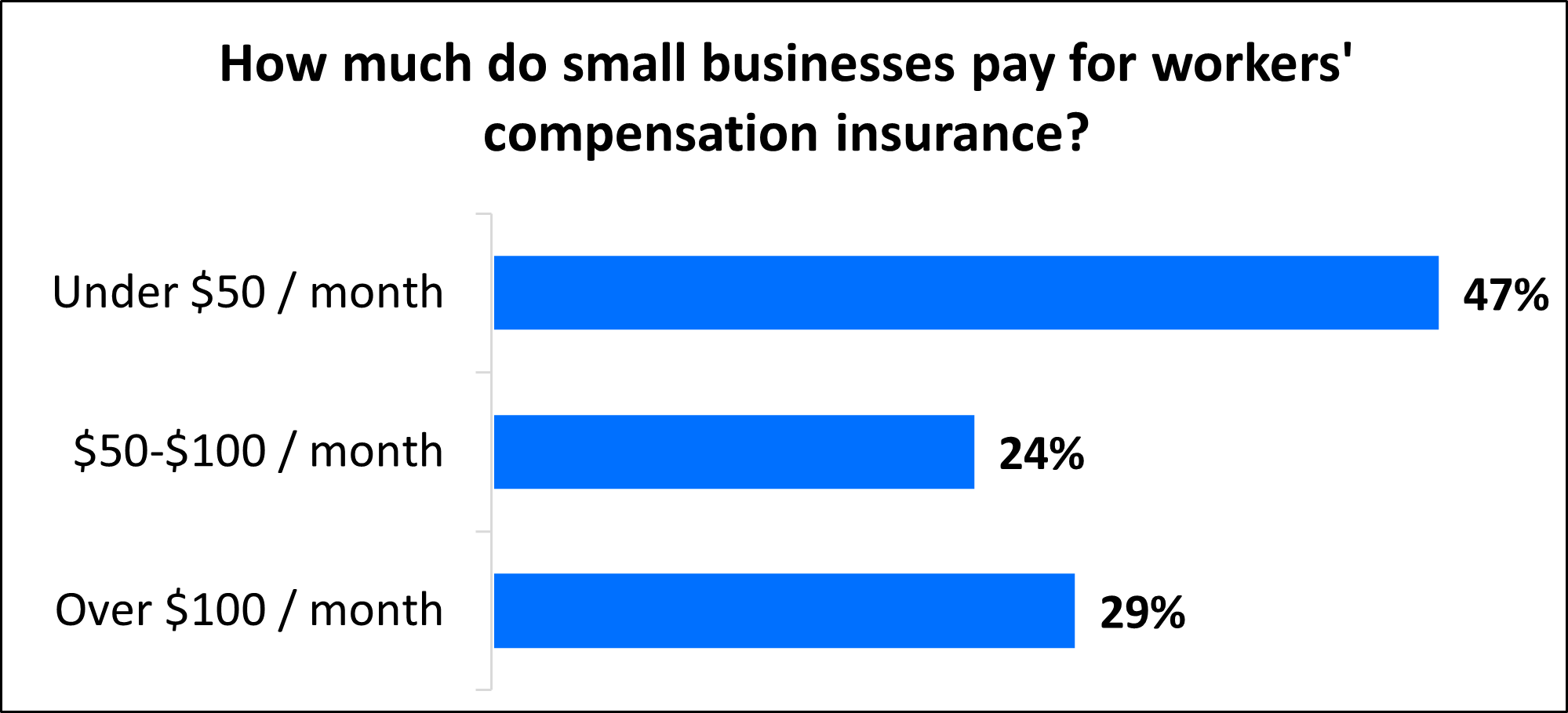
The average small business owner pays $54 per month for workers' comp, with 47% of policyholders paying under $50. Another 24% pay between $50 and $100 per month.
Annual premiums are typically between $300 and $5,000. The range in premiums is determined by your business type and risks, your location, your claims history, and the number of employees you have.

Key factors that affect workers' comp insurance costs
Here are the top factors that impact your workers' compensation insurance costs:
Policy limits
Workers' comp policy limits are generally divided into two groups:
- Employee benefits (Coverage A) - This covers medical costs, partial wages, and even disability benefits for full-time and part-time employees who suffer an accident or illness in the workplace.
- Employer's liability (Coverage B) - This protects the employer if an employee sues them over a workplace injury, often citing unsafe working conditions or environments.
Coverage A does not limit the amount it pays for a covered workplace injury or illness. Workers' compensation insurance covers the medical costs, partial wages, and even disability benefits for full-time and part-time employees.
However, employer’s liability insurance does have limits.
Employer’s liability insurance protects you when an employee sues over their injury. For example, a technician at your telecom company could slip and fall, resulting in medical care expenses.
As a result, they may blame you for an unsafe environment and bring legal action against your company. Workers' comp covers your legal expenses up to its limits if the case goes to court.
Standard minimum limits are $100,000 per accident, $500,000 per policy, and $100,000 per employee, though these limits are often not enough for many businesses.
Most companies choose a $1 million per-occurrence limit and a $1 million aggregate limit for employer’s liability insurance. If you choose higher limits, expect your workers' comp rate to increase.
Type of work your employees do
For consistency, most insurance companies use the National Council on Compensation Insurance (NCCI) class code system to determine your risk level and set workers' compensation insurance rates.
Some jobs carry a higher risk than others due to the work environment. And those who are more likely to get hurt will contribute to costlier workers' compensation coverage premiums.
For example, small business owners pay higher workers' comp premiums to cover employees who work with their hands, such as electricians and tree trimmers, than employees who work all day in an office. Lower-risk businesses, such as professional service providers and other office-based businesses, will pay lower rates.
Some of the most common injuries, such as falls, can happen in any workplace. So, regardless of risk level, be sure that all employees are covered under your workers' compensation policy.
Annual payroll
The more your employees earn, the higher your workers’ compensation costs. Injured employees can collect partial wages, so your insurance agency will factor your annual payroll costs into your insurance premiums. Higher payroll almost always equals higher rates.
Insurance companies consider the overall amount you pay out in payroll when determining your workers' compensation insurance premiums during the underwriting process.
Maintaining careful payroll records is critical to ensuring that you are not overpaying or underpaying for coverage. Insurance companies generally do annual audits, and good record-keeping makes this process easier for everyone.
Industry
Your industry is a major factor in determining your workers' compensation insurance rates. Riskier industries with more opportunities for injuries will have to pay higher workers' compensation insurance premiums than low-risk industries.
For example, companies in industries with a reputation for filing more claims, such as construction, will likely pay more for business liability insurance coverage.
You may even be legally required to carry workers' comp insurance, even if you have no employees, depending on your state laws and local regulations.
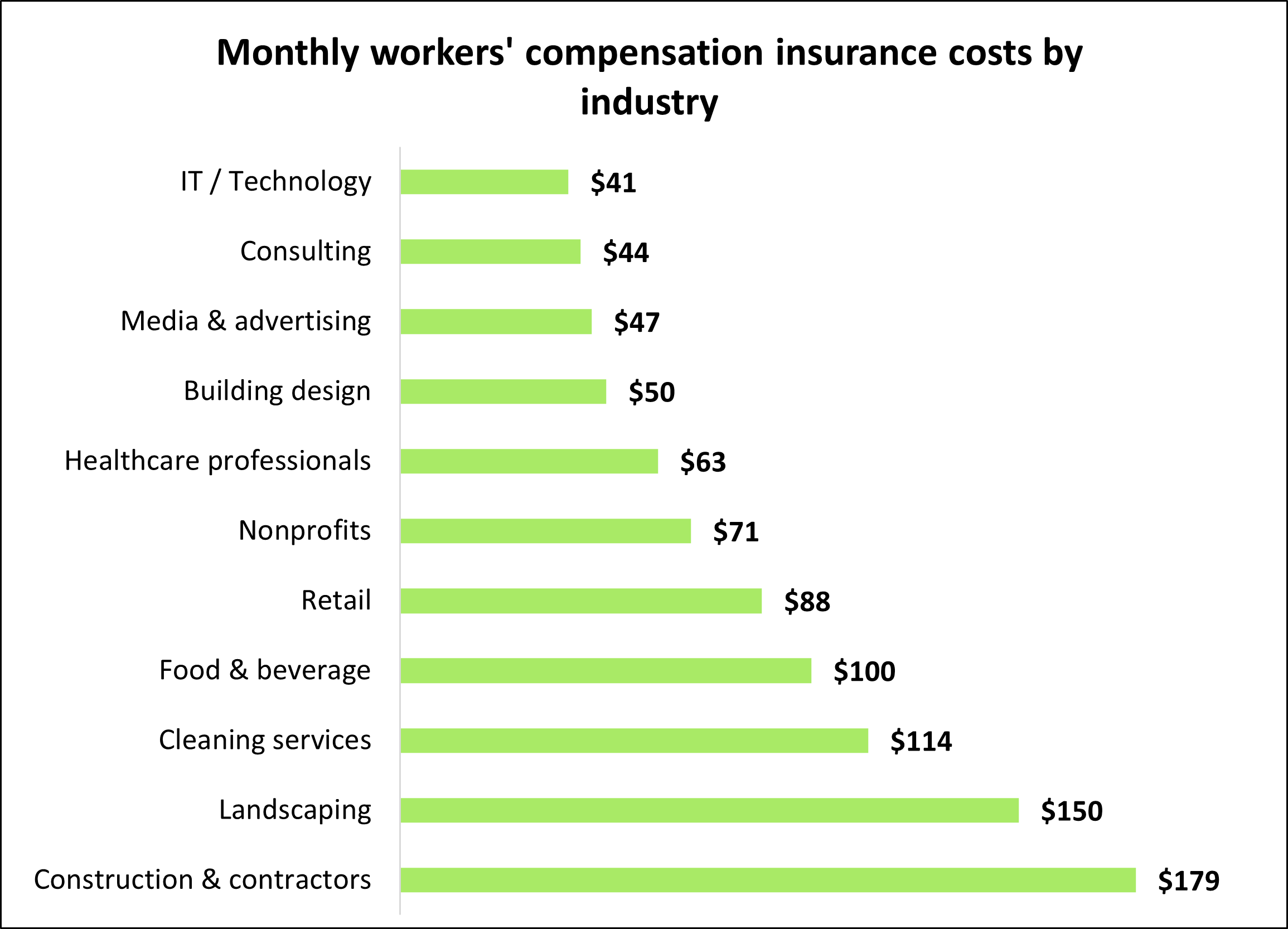
The average construction business pays the most, at $179 per month. Landscapers are also considered higher-risk and pay $150 per month.
Workers' comp is much less expensive for other industries that traditionally see fewer claims. Examples include IT businesses ($41 per month) and consulting ($44 per month).
Below are the average workers' compensation coverage costs across different industries.











Claims history
Your insurance company will look at your workers’ compensation claims history when it sets your premium.
As part of the calculation, your insurer assigns your company an experience modification factor. This number shows how your company's workers' comp claims compare to those of similar companies. If your claims were higher than the norm, you could expect to pay more going forward.
Risk management is an important aspect of maintaining fewer claims and keeping costs low. Many insurance companies will offer discounts, lower premiums, and group rating programs for companies that prioritize safe work conditions.
Safety programs, regular work environment audits, and ongoing employee training can help prevent claims.
Number of employees you have
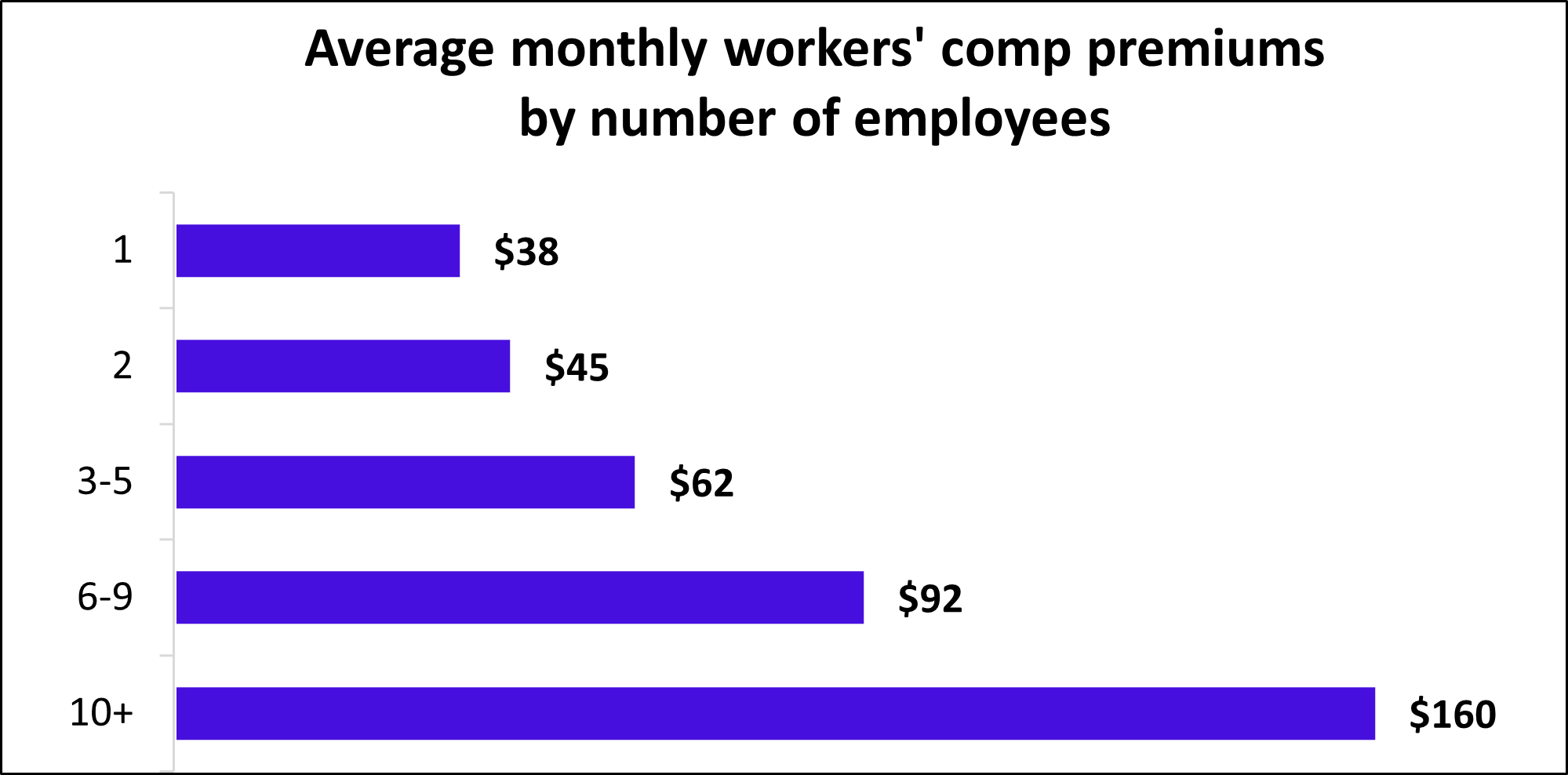
The more employees you have, the more opportunities there are for a worker to get injured and/or file a lawsuit. TechInsurance customers with one employee pay an average of $38 per month, while businesses with more than ten employees pay $160 per month.
Though it may be tempting to cut costs by skipping this coverage when it's not required, even sole proprietors and independent contractors should consider carrying workers' comp coverage. The high cost of medical expenses can make it well worthwhile in the long run.
Location
Because state requirements establish workers’ compensation laws, where your employees work will determine how much you pay for this policy.
For example, healthcare costs in certain states are higher than in others, which increases workers' comp rates. Some states have their own rating bureaus that set standard workers' comp premiums, which also impact costs.
The majority of states require companies with employees to carry workers' compensation insurance. State requirements also often mandate that businesses with company-owned vehicles carry commercial auto insurance.
Four states (North Dakota, Ohio, Washington, and Wyoming) require business owners to purchase workers' comp from a state fund.
Because these states are monopolistic, they offer small businesses only one option for getting workers' comp coverage. This means the premiums are already well established, and there isn't as much flexibility in costs compared to other states.
Below are some average workers' comp insurance costs in different states for TechInsurance policyholders.
State | Workers' comp insurance cost |
|---|---|
$63 per month | |
$59 per month | |
$65 per month | |
$61 per month | |
$56 per month | |
$51 per month | |
$47 per month | |
$43 per month | |
$34 per month | |
$46 per month |
Find workers' comp requirements in your state

How are workers' compensation premiums calculated?
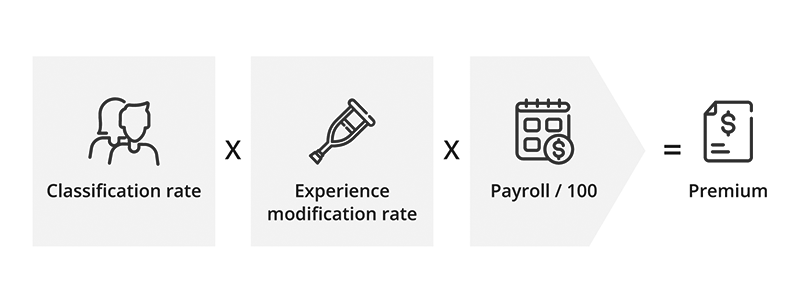
Insurance companies calculate your workers' comp insurance costs through a few factors:
- The type of work you and your employees do and their classification codes
- How many claims you've made previously, which impacts your experience modification rating
- Your business payroll, which determines your net rate. Generally speaking, your premium is a specific amount set forth for every $100 of your total business payroll
Through these factors and more, your insurance provider will calculate your workers' compensation premium:
How can you save money on workers’ compensation insurance?
Failing to obtain and maintain the required workers' comp coverage for your employees could prove devastating for your business. Workers' compensation protects your business from the high costs of medical expenses if you or your employees are injured. It also protects your business from fines and penalties you could face if it isn't compliant with state law.
There are things you can do to keep your workers' compensation rates low. Some strategies include:
Make annual payments
When you purchase a workers’ compensation insurance policy, you can pay your premium in annual or monthly installments. The annual option costs less than paying every month.
Classify your employees correctly
When assigning a classification code to an employee, be sure you are assigning the right one.
Not only will this help you avoid misclassification fines, but assigning the correct codes will also prevent unnecessary overpayment. For example, employees with desk jobs or other jobs with a low risk of injury cost less to insure than high-risk professions.
Focus on workplace safety
Business owners can avoid claims and keep rates low by taking steps to reduce work-related injuries. This includes:
- Training employees on safe lifting techniques
- Mopping up spills promptly to prevent falls
- Removing clutter and taping down loose cables
- Providing ergonomic setups to avoid injuries like carpal tunnel syndrome
Obtain a "pay-as-you-go" insurance policy
For some small businesses, getting a pay-as-you-go workers' comp policy is an easy way to save money. This type of coverage offers flexible premiums that change throughout the year, depending on the number of employees and fluctuations in total payroll over a 12-month span.
Get a minimum premium workers' compensation policy
If your small business has few risks and a small number of employees, you may meet the eligibility requirements for a minimum premium workers' compensation policy. This type of workers' comp policy sets your premium at the minimum (i.e., the smallest amount an insurance company will charge a business).
For independent contractors, sole proprietors, and other business owners who don't have any employees, you might be eligible for a type of minimum premium policy called a workers' comp ghost policy.
If you aren't required to carry workers' comp, you can still choose to carry occupational accident insurance (OAI). This is a cost-saving option for sole proprietors who face the risk of on-the-job injuries.
Prepare for your insurance audit
Having the right amount of insurance for your business needs is important and ensures you aren't under- or overpaying for your coverage. Each year, your provider will conduct a workers' comp audit to verify your payroll is correct and your premiums are accurate.
This audit will help adjust your premiums and provide a refund if you overpaid, or possibly an adjusted bill if you didn't pay enough.
Being prepared for the audit will help the whole process move faster and more smoothly.


How do you buy insurance with TechInsurance?
TechInsurance is a trusted insurance expert for small businesses, including contractors and consultants, with extensive knowledge of the IT sector. We help business owners compare quotes from top-rated insurance carriers, purchase policies tailored to their business needs, and manage coverage online.
By completing TechInsurance's easy online application today, you can compare free workers' comp quotes from top-rated U.S. carriers. TechInsurance insurance agents are available to help answer any questions you may have.
Once you find the right policies for your small business, you can begin coverage in less than 24 hours and get a certificate of insurance for your small business.
Verified workers' compensation insurance reviews
Hear from customers like you who purchased workers' compensation coverage.
Learn more about other business insurance costs
Insurance premiums vary based on the types of insurance policies a business buys. View our small business insurance cost overview or find out the average costs for other common types of business insurance.